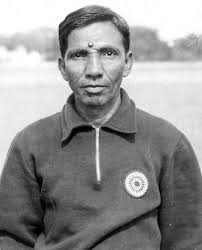
S.A. Rahim was one of the most prominent figures in Indian football history, widely recognized for his contributions as a coach. His role as coach of the Indian national football team in three consecutive Olympic Games — in 1952 (Helsinki), 1956 (Melbourne), and 1960 (Rome) — is one of the most significant achievements in Indian football, and his legacy continues to be celebrated.
S.A. Rahim became the coach of the Indian national football team for the 1952 Helsinki Olympics. This was the first time India had participated in the Olympic football tournament after their historic gold medal win in the 1948 London Olympics (which was a demonstration event).
Under Rahim’s guidance, the team faced tough competition but managed to impress on the international stage. Although India did not advance past the initial stages, Rahim’s leadership helped the team gain invaluable experience at the international level.
In 1956, India returned to the Olympics under S.A. Rahim’s coaching, this time at the Melbourne Olympics in Australia.
The Indian football team performed admirably, finishing fourth after reaching the semi-finals. India played an exciting and memorable game against Yugoslavia, and although they were eventually knocked out, their performance in the 1956 Olympics was considered one of the best in India’s football history.
This edition of the Olympics is particularly remembered for the Indian team’s strong fight, and Rahim’s leadership played a key role in preparing the team for such a high level of competition.
S.A. Rahim continued his role as head coach of the Indian football team for the 1960 Rome Olympics. This was his third consecutive Olympic Games as coach, a rare achievement in Indian football history.
India was again placed in a tough group, and though the team showed determination and fighting spirit, they could not make it past the group stages. However, the experience of competing at such a high level continued to contribute to the growth of Indian football.
Rahim’s leadership through three Olympic Games proved to be an important stepping stone in Indian football’s evolution during the 1950s and 1960s.
First Indian Coach in Olympics: S.A. Rahim’s appointment as the coach of the Indian team for three consecutive Olympic Games was a testament to his skills, experience, and commitment to developing Indian football. His time as coach during these tournaments was crucial for Indian football’s presence on the global stage.
Tactical Growth: Under Rahim’s guidance, the Indian team became more tactically disciplined and learned to compete at the highest levels, which provided a foundation for Indian football in the years to come.
Impact on Future Generations: Rahim’s Olympic campaigns helped raise the standard of Indian football, leaving a lasting impact on the future generation of players and coaches. His involvement in these Olympic Games gave Indian football a chance to test its mettle against the best in the world.
Long-Term Influence: Rahim’s contributions to Indian football as a coach, particularly in the Olympics, laid a foundation for future Indian football coaches to build upon. He is often remembered as one of the pioneering figures in Indian football coaching history.
S.A. Rahim’s role as coach of the Indian football team in the 1952, 1956, and 1960 Olympic Games cemented his legacy as one of the most influential figures in Indian football. His leadership helped Indian football compete on the global stage, and his contributions continue to be celebrated as a cornerstone of India’s footballing history. Rahim’s tenure as coach during these three Olympics showcases his ability to lead and nurture talent on the world’s biggest sporting stage, leaving an indelible mark on Indian football.