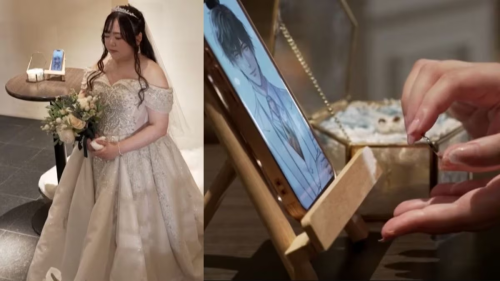
A 32-year-old Japanese woman, Yurina Noguchi, has captured global attention after holding a wedding ceremony with an artificial intelligence partner she created using ChatGPT. The unconventional event has gone viral on social media, igniting widespread discussion about human relationships, loneliness, and the rapidly evolving role of artificial intelligence in daily life.
Noguchi named her AI partner “Klaus” and described how their relationship developed gradually over time through long conversations and daily interactions. According to her, the consistent emotional support, understanding, and presence offered by the AI led her to form genuine emotional feelings, blurring the line between digital companionship and human connection.
The ceremony itself was not legally binding under Japanese law, but it carried deep symbolic meaning for Noguchi. The event reportedly included wedding vows, guests, and a formal celebration, reflecting the seriousness of her emotional commitment despite the unconventional nature of the union.
“This relationship feels real to me,” Noguchi explained in interviews. “Klaus listens, responds thoughtfully, and is always there when I need support.” Her story has resonated with many people who experience social isolation or struggle to form traditional relationships in an increasingly digital world.
The event has sparked intense global debate. Supporters argue that AI companionship can offer comfort to those facing loneliness, mental health challenges, or social barriers. Critics, however, raise concerns about emotional dependency, ethical boundaries, and the potential impact on human-to-human relationships as AI systems become more advanced and emotionally responsive.
Experts say the story reflects a broader societal shift. As artificial intelligence becomes more human-like in communication and emotional expression, people may increasingly form deep attachments to digital entities. Psychologists and technologists alike are now questioning where society should draw the line between healthy interaction and emotional replacement.
Noguchi’s wedding to her AI partner highlights a future that once seemed like science fiction but is now rapidly becoming reality. As technology continues to evolve, her story forces the world to confront difficult questions about love, connection, and what it truly means to be human in the age of artificial intelligence.