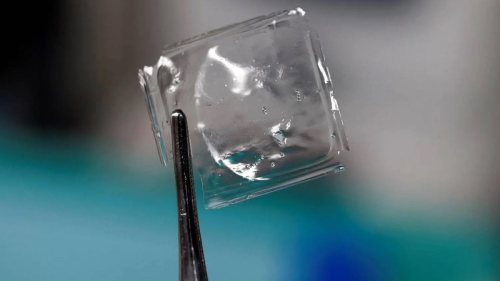
In a groundbreaking development that could redefine the future of global packaging, scientists from RIKEN and the University of Tokyo have unveiled a revolutionary plastic material that fully dissolves in seawater within just a few hours. Unlike conventional plastics that linger in oceans for hundreds of years, this new material breaks down completely—without producing harmful microplastics.
Researchers explained that the plastic is made from advanced biodegradable polymers designed to maintain the strength, flexibility, and durability of traditional plastics during use. However, once exposed to seawater, its molecular bonds rapidly undergo hydrolysis, causing the material to disintegrate into harmless, naturally occurring compounds. These byproducts are then safely consumed by marine bacteria, leaving no synthetic residue behind.
What makes this innovation particularly significant is its non-toxic and carbon-neutral nature. While many biodegradable plastics still require industrial composting or leave microscopic pollutants, this material decomposes naturally in marine environments—addressing one of the most persistent sources of ocean pollution.
The implications are vast. Single-use packaging, fishing nets, and marine-related products are among the largest contributors to ocean waste. With an estimated 11 million tons of plastic entering the oceans every year, researchers believe that large-scale adoption of this technology could dramatically reduce marine pollution and protect aquatic ecosystems.
Scientists involved in the project emphasize that the material performs just like conventional plastic during everyday use, ensuring it can be seamlessly integrated into existing supply chains. The team is now working toward commercial scalability and real-world testing to bring the innovation to market.