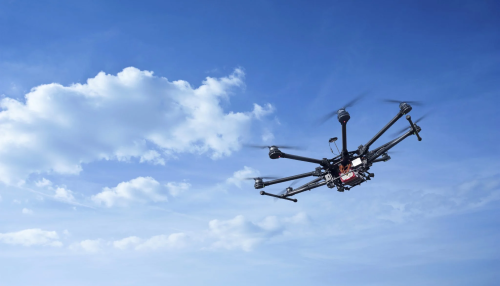
In a major breakthrough for clean aviation and unmanned technology, a hydrogen-powered drone has officially entered the Guinness World Records after completing a continuous 4-hour flight, setting a new global benchmark for endurance in its category.
The record-setting flight was achieved using a drone powered entirely by hydrogen fuel cell technology, marking a significant advancement over conventional battery-powered drones, which typically remain airborne for less than one hour. Engineers involved in the project confirmed that the drone maintained stable performance throughout the flight, demonstrating the reliability and efficiency of hydrogen as a next-generation energy source.
Unlike traditional lithium-ion batteries, hydrogen fuel cells generate electricity through a chemical reaction between hydrogen and oxygen, producing only water vapor as a byproduct. This makes the technology not only highly efficient but also environmentally friendly. Experts believe this innovation could revolutionize industries such as aerial surveillance, disaster response, agriculture, logistics, and environmental monitoring.
Guinness World Records officials verified the flight duration after rigorous documentation and real-time monitoring, officially recognizing the achievement as the longest continuous flight by a hydrogen-powered unmanned aerial vehicle. The drone reportedly operated under varying wind and altitude conditions, further underscoring its technical robustness.
Speaking after the record was confirmed, project leaders said the milestone represents a critical step toward sustainable aviation. “This achievement proves that hydrogen-powered flight is not just theoretical—it is practical, scalable, and ready for real-world applications,” a senior engineer stated.
Industry analysts predict that hydrogen propulsion could play a key role in the future of aviation, particularly for long-endurance drones and eventually even manned aircraft. The record-breaking flight stands as a powerful example of how clean energy innovations are pushing the boundaries of what is possible in modern aerospace technology.