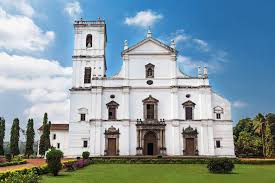
The Se Cathedral in Old Goa is one of the most significant and largest churches in India, known for its historical, architectural, and religious importance. Here’s more detailed information about the cathedral.
The Se Cathedral measures 76.2 meters (250 feet) in length and 55 meters (180 feet 5 inches) in width, making it the largest cathedral in India. The grandeur of its size is an expression of the importance of the Catholic Church in Goa during the Portuguese colonial era.
The construction of the Se Cathedral began in 1562, and it was completed in 1619, although it was consecrated only in 1640. It was built by the Portuguese as a symbol of the glory of Catholicism in India, particularly in Goa, which was a prominent center for Portuguese influence and Christian missionary activity in Asia.
The cathedral follows the Portuguese-Manueline architectural style with a blend of Gothic, Renaissance, and Moorish influences. Its design is characterized by simple yet majestic interior spaces, with a high vaulted ceiling. The façade features typical Manueline elements, while the interior is adorned with large wooden panels, including beautifully crafted altarpieces and a stunning altar.
Originally, the Se Cathedral had two towers, but one of them collapsed in 1776 due to structural damage. The second tower was never rebuilt, which has resulted in the cathedral’s current asymmetrical appearance. Despite the collapse, the Se Cathedral continues to be an iconic symbol of Goa’s colonial past.
Inside the cathedral is the Golden Bell, one of the largest and most famous bells in India. The bell was brought to Goa from the Philippines in 1583 and is known for its rich, deep tone. It was historically used to signal significant religious events and has a symbolic association with the power of the church during the colonial period.
The Se Cathedral was originally dedicated to St. Catherine of Alexandria and is also known as the Cathedral of St. Catherine. The cathedral serves as the seat of the Archbishop of Goa and is an important center for Christian religious life in the region.
The Se Cathedral is part of the UNESCO World Heritage Site of Churches and Convents of Goa, which includes several other notable structures like the Basilica of Bom Jesus and the St. Augustine Tower. These sites reflect Goa’s rich colonial and missionary history, which has left a lasting impact on the culture and architecture of the region.
The Se Cathedral has played a significant role in the cultural and religious history of Goa. It hosts numerous religious ceremonies, including the famous Feast of St. Catherine and other major Catholic celebrations. The cathedral’s grand scale and history have made it a focal point for tourists and pilgrims alike.
The Se Cathedral is not just the largest church in India but also a monument of great cultural and religious significance. It stands as a reminder of Goa’s historical role in the spread of Christianity in Asia during the Portuguese colonial era, and its unique architecture, history, and artifacts continue to attract visitors from around the world.