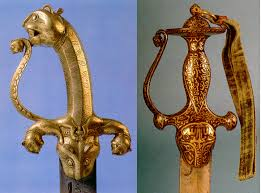
Wootz steel was an advanced form of high-carbon crucible steel produced in India as early as the 3rd century BCE. It became world-famous for its exceptional strength, sharpness, and ability to hold a fine edge, making it highly sought after for swords and weapons in medieval times.
Unique Composition: Contained controlled amounts of carbon (1-2%), giving it superior hardness and flexibility.
Dendritic Patterns: The steel exhibited distinctive swirling patterns (akin to Damascus steel), formed due to impurities and alloying elements.
Exceptional Quality: Known for its ability to produce extremely sharp, tough, and resilient blades.
Exported Globally: Indian wootz steel was traded widely to Persia, Arabia, the Roman Empire, and later to Europe.
Famous Damascus Swords: The legendary Damascus swords were made using imported Indian wootz steel, known for their ability to cut through lesser blades and armor.
Praised by Scholars: Arab travelers like Al-Kindi (9th century) and Al-Biruni (11th century) wrote about the exceptional quality of Indian steel.
British Ban (1857): After the First War of Independence (1857), the British banned the production of weapons, leading to the loss of traditional wootz steel-making techniques.
Industrial Changes: The rise of modern steel-making methods in Europe replaced traditional Indian techniques.
Knowledge Lost: By the late 19th century, the secret of wootz production was forgotten, and its metallurgy remains a subject of research today.
Despite its decline, wootz steel remains an iconic symbol of India’s advanced metallurgical knowledge, inspiring modern metallurgists to recreate its lost techniques.