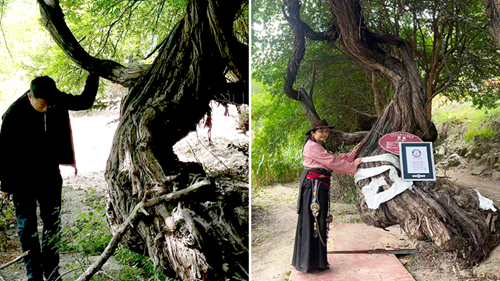
In an extraordinary botanical revelation, scientists have identified a 416-year-old grapevine in the Nyingchi region of Tibet, now officially recognized as the oldest living grapevine in the world. The ancient vine, still bearing fruit, offers a remarkable glimpse into centuries of cultivation, climate adaptation, and cultural heritage.
According to researchers from the Tibet Academy of Agricultural Sciences, the vine has been growing near a centuries-old monastery, entwined around a stone pillar believed to date back to the early 1600s. Carbon dating confirmed that the plant first sprouted around 1609 AD, during the Ming Dynasty era.
The massive trunk of the grapevine measures nearly 1.2 meters in circumference, and despite its age, it continues to yield small, sweet purple grapes every autumn. Local monks have preserved the vine for generations, using its fruit for traditional Tibetan wine and religious offerings.
Lead researcher Dr. Tsering Norbu described the find as “a living archive of environmental history — this vine has witnessed dynasties rise and fall, yet it still thrives in harmony with nature.”
The discovery has attracted international attention from botanists and historians alike, with UNESCO considering the site for inclusion in its Intangible Agricultural Heritage list. Tourism authorities in Tibet also plan to develop a sustainable eco-tourism trail around the area to showcase ancient Himalayan viticulture.