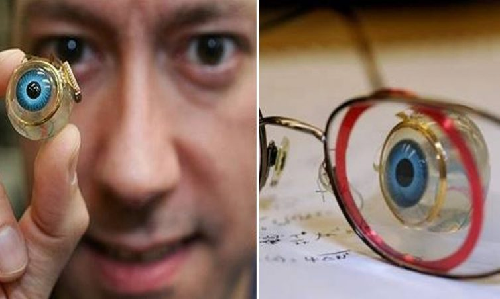
In a groundbreaking medical advancement, a team of doctors and biomedical engineers in Australia have developed the world’s first bionic eye capable of fully restoring vision in people who are completely blind.
The pioneering device, known as the Phoenix 99 Bionic Eye, was created by researchers at the University of Sydney and the University of New South Wales (UNSW). Unlike previous visual prosthetics, this bionic eye has demonstrated the ability to restore detailed, real-time vision, allowing users to recognize faces, navigate environments, and even read large text.
“This is a transformative moment for global healthcare and vision science,” said Dr. Penny Allen, the lead researcher on the project. “For the first time, we’re not just improving sight—we’re restoring it.”
- The implant: A tiny microelectrode array surgically placed on the retina
- The external system: Smart glasses equipped with a camera that wirelessly transmits data to the implant
- The result: Real-time visual signals sent directly to the brain’s visual cortex
Clinical trials conducted with a small group of participants have shown remarkable results, with completely blind individuals able to detect movement, identify objects, and navigate unfamiliar spaces — many for the first time in decades.
The project has received support from the Australian government and international health foundations, and fast-track regulatory approval is now underway to make the bionic eye accessible to thousands suffering from degenerative eye diseases like retinitis pigmentosa and age-related macular degeneration.
“The goal is not just to restore vision, but to restore independence, dignity, and quality of life,” said Dr. Allen.
The Australian-developed Phoenix 99 Bionic Eye is expected to begin commercial distribution by late 2026, positioning the country as a global leader in neural prosthetics and bioengineering.