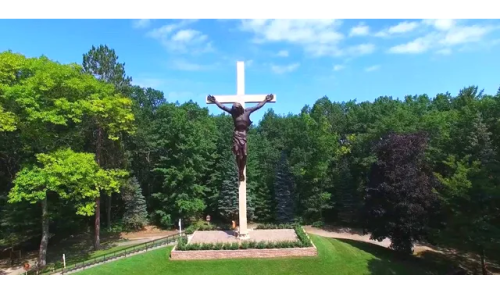
The world’s largest crucifix carved from a single tree stands as a powerful symbol of faith, devotion, and extraordinary human craftsmanship. Located in Cebu, Philippines, the monumental wooden crucifix has drawn international attention for its scale, artistry, and the remarkable feat of being sculpted entirely from one massive tree trunk.
Unlike composite or assembled monuments, this crucifix was carved from a single piece of wood, making its creation both technically demanding and artistically rare. Master craftsmen spent years carefully shaping the structure, ensuring that the integrity of the wood was preserved while revealing intricate details of the crucified figure and the cross itself.
Artisans involved in the project say the greatest challenge was balancing size with structural stability. Working with a single tree meant there was no margin for error—every cut had to be precise. The result is a towering crucifix that reflects not only religious devotion but also deep respect for traditional wood-carving techniques passed down through generations.
The monument has become an important pilgrimage and cultural site, attracting worshippers, tourists, and art enthusiasts from around the world. Visitors often describe the experience as both humbling and awe-inspiring, as the scale of the crucifix amplifies its spiritual message.
Local historians note that Cebu has long been a center of Christian heritage in the Philippines, and the crucifix reinforces the region’s role in preserving religious art and tradition. Beyond its spiritual significance, the structure also highlights sustainable craftsmanship, as the entire work honors the natural form of the tree from which it was created.
Recognized globally as the largest crucifix of its kind carved from a single tree, the monument stands as a rare fusion of faith, nature, and human skill. It serves as a reminder that some of the world’s most powerful landmarks are born not from steel or concrete, but from patience, belief, and respect for natural materials.