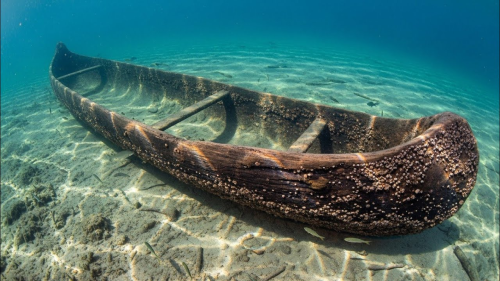
Archaeologists in North Carolina have made an extraordinary discovery: a 28-foot Native American canoe estimated to be around 1,000 years old. Resting beneath the waters of Lake Waccamaw, this ancient canoe offers a rare glimpse into the lives of the Waccamaw Siouan Tribe, who once inhabited the region.
The Waccamaw Siouan Tribe
The Waccamaw Siouan Tribe has lived in this area for centuries, relying on the region’s rivers and lakes for survival. Skilled hunters, gatherers, and traders, their ancestors used canoes like the one recently discovered to navigate waterways for fishing, trade, and transportation. This discovery sheds light on the tribe’s ingenuity and deep connection to their environment.
The Canoe
The canoe is a remarkable testament to ancient craftsmanship. Its design, choice of wood, and construction techniques reflect sophisticated engineering knowledge, highlighting the tribe’s advanced skills in woodworking and watercraft design. Experts say the canoe exemplifies the ingenuity and resourcefulness of the Waccamaw Siouan people.
Preservation and Conservation
The canoe’s preservation is owed to the unique conditions of Lake Waccamaw. The waterlogged sediments created a low-oxygen environment, slowing decay over centuries. Archaeologists and conservationists have carefully excavated the artifact, employing specialized techniques to ensure its long-term preservation.
Cultural Significance
For the Waccamaw Siouan Tribe, the canoe is far more than an archaeological find—it is a profound link to their ancestors, land, and waterways. Plans are underway to preserve the canoe as a heritage artifact, where it will be displayed to honor the tribe’s enduring legacy and educate the public about their rich cultural history.
This discovery not only enriches our understanding of Native American history but also serves as a reminder of the deep connections between communities and the natural world that have endured for generations.