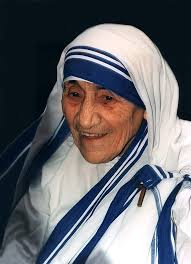
Yes, Mother Teresa was the first woman to receive the Nobel Prize in Peace. She was awarded the Nobel Peace Prize in 1979 for her selfless work among the poor and destitute, particularly in Calcutta (now Kolkata), where she dedicated her life to helping the marginalized and suffering.
Key Facts about Mother Teresa:
- August 26, 1910, in Skopje, which was then part of the Ottoman Empire and is now in North Macedonia. September 5, 1997, in Calcutta (now Kolkata), India. Anjezë Gonxhe Bojaxhiu (she later took the name Mother Teresa after joining the Sisters of Loreto).
- Nobel Peace Prize: 1979.
- In 1950, Mother Teresa founded the Missionaries of Charity, a Roman Catholic religious congregation with the primary goal of helping the poor, sick, orphans, lepers, and dying. The congregation started with just a handful of members, but it soon grew to include thousands of women and men dedicated to serving the poor.
- Her organization worked in over 130 countries, offering a wide range of services such as orphanages, homes for the elderly, hospices, and centers for lepers and people with HIV/AIDS.
- Mother Teresa’s work was predominantly focused on those who were often forgotten by society, including the destitute, homeless, sick, and dying. She believed that every life had value and worked to provide dignity, care, and love to those in the most desperate circumstances.
- Her most famous work took place in Calcutta (Kolkata), where she founded Nirmal Hriday (Pure Heart), a hospice for the dying destitute, where the terminally ill were cared for with love and dignity.
- Mother Teresa famously said, “Not all of us can do great things. But we can do small things with great love.”
- She believed that showing love and compassion to those who suffer was the greatest act of service to humanity. Her work was driven by a deep religious devotion and a commitment to living out the principles of Christianity, particularly the teachings of Jesus Christ regarding love, compassion, and selflessness.
- Awarded in 1979: Mother Teresa was awarded the Nobel Peace Prize in 1979, recognizing her immense humanitarian work and dedication to helping the poorest and most marginalized people around the world. The Nobel Committee described her as a “symbol of the love and compassion that all people should aspire to.”
- Her Speech at the Nobel Ceremony: When accepting the award in Oslo, Norway, she famously said:
“I accept the award in the name of the poor… I think it is very beautiful to be able to do something for the poor… It is the poor who are the real heroes.” - A Global Icon of Compassion: By receiving the Nobel Peace Prize, Mother Teresa gained worldwide recognition. She was celebrated as a global symbol of selflessness, and her work inspired people from all over the world to engage in charitable work and volunteerism.
- Bharat Ratna (1980): Mother Teresa was awarded India’s highest civilian honor, the Bharat Ratna, in recognition of her extraordinary contribution to humanitarian work, particularly in India.
- Padma Shri (1962) and Padma Bhushan (1968): She was also honored with India’s other prestigious civilian awards, Padma Shri and Padma Bhushan, for her philanthropic efforts.
- Honorary Citizenship of the United States: In 1996, Mother Teresa was granted honorary U.S. citizenship, recognizing her humanitarian work worldwide.
- Mother Teresa is regarded as one of the most well-known and admired figures in the world due to her lifelong dedication to alleviating the suffering of others. Her legacy continues through the Missionaries of Charity, which continues to operate globally, running orphanages, homes for the aged, schools, and hospices in over 130 countries.
- After her death in 1997, Mother Teresa was beatified by the Catholic Church in 2003, and she was declared a saint in 2016 by Pope Francis, in recognition of her work and her deep faith.
- She was canonized as Saint Teresa of Calcutta on September 4, 2016, by Pope Francis, at a ceremony in the Vatican, where thousands of her followers gathered to celebrate her legacy.
- Mother Teresa’s life and mission inspired millions of people to dedicate themselves to helping others. Her work in promoting compassion, kindness, and human dignity continues to inspire global movements for human rights, charity, and volunteerism.
- Her life has been the subject of numerous books, documentaries, and films, including the 2003 film “Mother Teresa” starring Olivia Hussey. She has become an enduring symbol of selfless service and compassion across the world.
Mother Teresa’s receipt of the Nobel Peace Prize in 1979 marked a significant moment in the recognition of humanitarian work and the role of women in global peacebuilding efforts. She remains an enduring symbol of compassion, selflessness, and service to humanity. Her life and work, especially with the most marginalized and destitute, continue to inspire millions of people around the world to serve others with love and empathy.