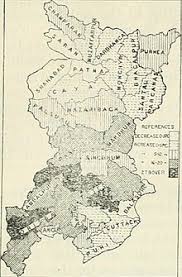
The creation and subsequent division of the Bihar and Orissa Province were significant milestones in the administrative and political history of British India, shaping the boundaries and identities of several present-day Indian states. Here’s a deeper look at these events:
On 1 April 1912, the Bihar and Orissa Province was officially formed by the British colonial government. It was carved out from the Bengal Presidency, which was one of the largest administrative divisions in British India at the time. This formation represented the first significant acknowledgment of the distinct identities of regions within the larger Bengal region.
- Present-day Bihar and Jharkhand: These regions, which had historically been part of the Bengal Presidency, were merged into the new province, forming a political unit that represented the socio-economic and cultural characteristics of these areas.
- Parts of present-day Odisha: The newly formed province also included areas that are now part of Odisha. The coastal region, with its unique linguistic and cultural traditions, was part of the broader territorial structure, although the distinct identity of Odisha would eventually lead to the province’s separation in 1936.
The creation of Bihar and Orissa as a separate administrative province helped address some of the regional demands for governance based on local concerns, which were often overshadowed by the larger Bengal administration. It also set the stage for recognizing the cultural and linguistic diversity within British India.
On 1 April 1936, Bihar and Orissa were separated into two independent provinces. This division marked a significant political decision by the British authorities, driven by growing regional linguistic and cultural demands that had emerged within the broader administrative structure of British India.
- Bihar Province: The region of Bihar, which included both Bihar and Jharkhand, was designated as its own province. It represented the Hindi-speaking, predominantly rural area with a rich history that included major agricultural, educational, and political developments.
- Orissa Province: The Orissa Province, which was largely a coastal region, was separated to form a distinct province, primarily due to its distinct linguistic (Oriya) and cultural identity. The creation of the Orissa province also marked the beginning of efforts to give the Oriya-speaking people a greater sense of self-governance and regional identity.
The division was driven by the growing demand for regional identity, particularly from the Oriya-speaking population. The people of Orissa had long advocated for a separate province to preserve their distinct language, culture, and socio-political interests. Similarly, Bihar and Jharkhand had a separate socio-economic profile and were also pushing for more local governance, which justified their separation from Orissa.
The separation of Bihar and Orissa Province laid the foundation for future political and administrative developments in the region. Some of the key consequences of the division include:
- Bihar’s Growth and Later Jharkhand Creation (2000): After independence, Bihar continued to be a prominent state in India, but due to growing demands for a separate state from the tribal and local population of Jharkhand, the state was carved out in 2000. The creation of Jharkhand as a separate state acknowledged the distinct tribal identity, language, and demands for economic and administrative autonomy.
- Development of Odisha’s Unique Identity: Odisha, after becoming a separate province, saw a continued rise in cultural and linguistic identity. In the post-independence era, Odisha emerged as a state with its own distinct historical and cultural features. The state developed a strong sense of pride in its Odisha language (Oriya) and culture, with a rich tradition in arts, literature, and architecture. Odisha has since emerged as an important state in Eastern India with a growing economy, based on agriculture, industry, and tourism.
- Impact on Regional Politics: The division also influenced regional politics. Over time, states like Bihar, Jharkhand, and Odisha became important players in India’s national political landscape. Each state has contributed to the shaping of India’s political, social, and economic discourse.
The splitting of the Bihar and Orissa Province paved the way for the creation of modern states in India. Over time, more states were created on the basis of linguistic and cultural factors, reflecting the growing demand for regional self-determination. The legacy of these events is seen in the modern federal structure of India, where states such as Jharkhand (2000) and Odisha continue to grow and evolve with their unique identities.
The Bihar and Orissa division underlined the importance of linguistic and cultural identities in shaping the administrative boundaries of India. The linguistic reorganization of states in 1956 furthered this trend, leading to the establishment of states based primarily on common language and culture, such as Andhra Pradesh, Maharashtra, and others.
The creation and subsequent division of Bihar and Orissa Province were key moments in British India’s political history, shaping the boundaries of modern states like Bihar, Jharkhand, and Odisha. This administrative reorganization highlighted the importance of recognizing regional identities, linguistic differences, and cultural diversity. The legacy of this division continues to influence the socio-political landscape of eastern India, where the three states remain integral to India’s development and governance.