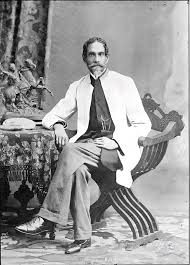
- Satyendranath Tagore (1842–1923), the elder brother of renowned poet Rabindranath Tagore, made history by becoming the first Indian to join the Covenanted Civil Service (ICS), later known as the Indian Civil Service.
- He cleared the entrance examination for the ICS in 1863, during the period of British colonial rule in India. His success was groundbreaking as it marked a significant achievement in the fight for Indian representation in the British-administered civil services.
- Initially, the Indian Civil Service (ICS) was an exclusive domain for British officers. However, the Indian reformers of the time, including Satyendranath, played a crucial role in advocating for the inclusion of Indians in this prestigious institution.
- In 1853, the entrance examination for the ICS was opened to Indians, following years of pressure from Indian nationalists.
- Satyendranath was one of the first Indians to seize this opportunity and clear the highly competitive examination, paving the way for others to follow.
- After successfully completing his training in England, Satyendranath was appointed to the Bombay Presidency in 1864.
- The Bombay Presidency during that time included areas that now comprise present-day Maharashtra, Gujarat, and Sindh. His appointment to this important region marked a key moment in Indian civil services.
- Satyendranath Tagore’s appointment to the ICS was not just an individual achievement, but a symbolic step toward greater Indian representation in the upper ranks of the colonial administration.
- His entry into the ICS was groundbreaking as it represented the possibility for Indians to excel in the administrative machinery, which had previously been dominated by the British.
- His success inspired later generations of Indian students to pursue careers in the ICS and other colonial services, playing a part in the Indianization of civil services over time.
- Beyond his administrative role, Satyendranath Tagore was a key figure in the Bengal Renaissance, a movement that sought to modernize Indian society while preserving its cultural heritage.
- He was deeply involved in literature, music, and social reform, making notable contributions to progressive thought in India.
- Satyendranath also advocated for gender equality and supported social reforms that aimed to uplift women and marginalized communities in Indian society.
- Administrative Impact: His achievement in joining the ICS was a monumental step in the increasing Indian representation in the civil services, which eventually led to the Indianization of the administrative structure in British India.
- Cultural Impact: As a leading figure in the Bengal Renaissance, Satyendranath’s contributions to Indian literature, music, and social reform helped shape modern Indian thought and culture.
- His success demonstrated that Indians had the ability to excel in domains that had previously been monopolized by the British, thereby challenging the colonial narrative and fostering a spirit of independence and self-reliance.
Satyendranath Tagore’s achievement in entering the Indian Civil Service marked a significant milestone in India’s journey toward self-governance and greater participation in the colonial administrative system. His contributions to literature, culture, and social reform continue to inspire and shape India’s intellectual and cultural landscape today.