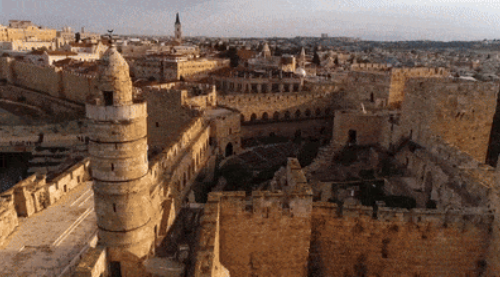
In a landmark archaeological breakthrough, Israeli archaeologists have unveiled the longest known section of a 2,100-year-old wall foundation dating back to the Hasmonean period — a discovery that significantly enhances our understanding of ancient Jerusalem’s military defenses. The massive structure, stretching nearly 50 meters, was found hidden beneath the iconic Tower of David Museum in the Old City.
The newly exposed fortifications are believed to have formed a crucial part of Jerusalem’s defensive system during the second century BCE, a turbulent era marked by political upheaval and military confrontations. Experts from the Israel Antiquities Authority (IAA) report that the unearthed foundation aligns with historical descriptions provided by the famed Jewish historian Flavius Josephus, who recorded the existence and later dismantling of parts of these ancient walls during a cease-fire agreement.
According to the IAA, this discovery not only confirms long-debated interpretations of early Jerusalem architecture but also offers rare physical evidence supporting textual accounts of conflict negotiations in antiquity. The exceptional preservation of the wall allows researchers to analyze construction techniques used by the Hasmoneans, shedding new light on the engineering prowess of one of the region’s most influential Jewish dynasties.
In addition to the scholarly significance, the IAA has announced plans to integrate the ancient structure into a new gallery inside the Tower of David Museum. The exhibit will feature a state-of-the-art floating glass floor, enabling visitors to view the ancient remains from above while preserving their integrity. The museum’s upcoming expansion aims to transform the site into a world-class hub for historical exploration and cultural heritage.
Archaeologists believe the find could reshape future studies of Jerusalem’s early fortifications, offering unprecedented insight into the city’s defensive strategies, political history, and architectural innovations.