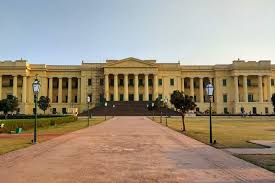
Hazar Duari Palace, often referred to as the “Palace of a Thousand Doors”, is a historic palace located in Murshidabad, West Bengal, India. The palace is famous for its 1,000 doors, of which 100 are false, making it a fascinating architectural marvel. It was the palace of Nizam Humayun Khan, who ruled from 1824 to 1838, and it was designed by the Scottish architect Duncan McLeod.
- Hazar Duari Palace was constructed in the early 19th century during the reign of Nizam Humayun Khan.
- The palace was designed as a royal residence for the Nawab of Murshidabad, who ruled the region under the influence of the British East India Company during the colonial period.
- The name “Hazar Duari” translates to “Thousand Doors”, a reference to the large number of doors in the palace, although not all are functional.
- The palace was part of a larger complex called Kila Nizamat in Murshidabad, which served as the administrative center of the Nawab of Bengal during their rule.
- Design and Layout: The palace has a rectangular layout, with its design influenced by European classical and Islamic architectural styles. The building has an imposing structure, with arched windows and balconies that overlook the surrounding areas.
- Doors: The most distinctive feature of Hazar Duari is the 1,000 doors that adorn its façade. These doors, along with numerous windows and balconies, give the palace an intricate and almost labyrinthine feel. However, many of the doors are false and do not lead anywhere, which adds to the mystique and complexity of the palace.
- False Doors: Of the 1,000 doors, only 900 are functional, while the remaining 100 doors are false and purely decorative. The purpose of the false doors was to confuse potential intruders or attackers, making it difficult for them to navigate the palace.
- The false doors are also thought to symbolize the illusion of grandeur and mystery, serving as an aesthetic and strategic element in the design of the palace.
- Duncan McLeod, a Scottish architect, was hired by the Nawab to design the palace. His vision combined British and Indian architectural elements, with an emphasis on symmetry, elegance, and functional luxury.
- The use of classical European features such as pillars, arches, and balconies can be seen in the palace’s design, while elements like intricate woodwork, carved ceilings, and Indian-inspired motifs give it a distinctive touch.
- The architect’s work reflects the blending of the colonial and traditional styles of the time, which is a hallmark of many buildings constructed in the British colonial era.
- The interiors of Hazar Duari are equally impressive, with spacious rooms, chandeliers, ornate decorations, and antique furniture that reflect the opulence of the royal family.
- The palace has several rooms, including reception halls, private chambers, and offices for the administration. The interior design is a blend of European-style salons and traditional Indian artwork, creating a lavish atmosphere that was suited to the royalty of the time.
- Murals and paintings adorn the walls of the palace, many of which depict scenes from royal life, hunting expeditions, and local culture.
- The palace’s labyrinthine design, with the false doors and numerous rooms, was intended to serve as a defense mechanism. It was difficult for invaders to navigate the palace without getting lost in the maze of rooms and corridors.
- The design is also symbolic of the power and mystique of the ruling family, reflecting their wealth and the enigma surrounding their court.
- The false doors also served a practical purpose by limiting access to certain areas, ensuring the safety and privacy of the royal family.
- Hazar Duari Palace served as the administrative and residential center for the Nawab of Murshidabad during the early 19th century. It housed the royal family and was the political hub of the region.
- In addition to its function as a residence, the palace also hosted ceremonial events, banquets, and court proceedings, making it an important symbol of the power and influence of the Nawabs.
- After the decline of the Nawab’s rule, the palace and its grounds gradually fell into disrepair but still remain an important part of Murshidabad’s heritage.
- Hazar Duari Palace is currently a museum, and it attracts tourists from all over the world. The museum houses a vast collection of artifacts, including paintings, weapons, coins, and other items from the Nawab’s era.
- Visitors can explore the palace’s spacious halls, gardens, and historical artifacts, which offer a glimpse into the life of the royal family and the grandeur of the palace.
- The palace’s intricate architecture, along with its rich history, makes it a popular attraction for those interested in history, architecture, and Indian culture.
- The design of Hazar Duari influenced the architectural style of later buildings in the region, with its combination of Indian and European elements serving as a model for other colonial-era structures in West Bengal and beyond.
- Its design reflects the social and political climate of the time, where the British influence was becoming more pronounced, but traditional Indian culture was still very much alive.
- Hazar Duari Palace represents the historical significance of the Nawab of Murshidabad, who were once the rulers of Bengal, and the palace itself is a testament to their wealth and culture.
- The palace is also a significant part of Murshidabad’s cultural landscape, which includes other historical buildings and sites such as the Nizamat Imambara, Motijhil, and Moti Jheel.
- Today, the palace and its grounds continue to serve as a reminder of the royal heritage of Murshidabad and the Nawab era.
Hazar Duari Palace is a fascinating example of early 19th-century architecture that combines European and Indian design influences. Its 1,000 doors, including the false ones, its grand halls, and its historical significance as the residence of the Nawab of Murshidabad make it one of the most iconic landmarks in West Bengal. The palace’s intricate design and rich history continue to captivate visitors, offering them a glimpse into the past and the grandeur of royal life in Murshidabad.