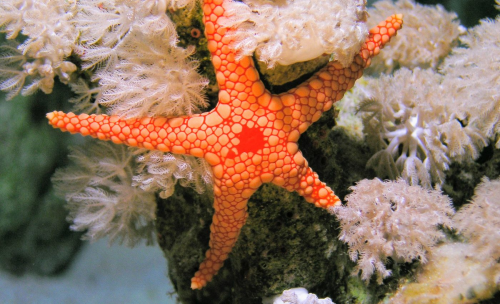
Starfish are commonly known for their iconic five-arm symmetry, a shape often seen as a symbol of balance and perfection in marine life. However, scientists say this familiar image represents only part of the story. In oceans around the world, certain starfish species defy this rule entirely, growing extra limbs, uneven shapes, or swollen bodies that appear almost unreal.
These unusual forms are not evolutionary mistakes. Instead, they are powerful examples of extreme adaptability. Starfish possess one of the most remarkable regenerative abilities in the animal kingdom. When an arm is lost due to injury, predation, or environmental stress, the animal can regrow it over time. In some cases, the regeneration process does not restore perfect symmetry, resulting in bizarre yet fully functional body shapes.
Marine biologists explain that these asymmetrical starfish can still crawl, feed, and survive just as effectively as their more symmetrical counterparts. Their internal systems adapt to support their altered structure, proving that strict balance is not a requirement for survival in the deep sea.
Rare genetic variations can also play a role in shaping these strange appearances. Combined with the harsh and unpredictable conditions of the ocean floor, these factors produce starfish that challenge traditional ideas of what a “normal” animal should look like.
“In the deep ocean, perfection isn’t necessary,” researchers note. “What matters is resilience.” The strange shapes seen in these starfish reflect lives shaped by damage, recovery, and persistence rather than flaw or failure.
Scientists say these creatures serve as a reminder that nature does not strive for beauty, symmetry, or human expectations of design. Instead, evolution favors what works. Even when the result looks unusual or unsettling, survival remains the ultimate measure of success.