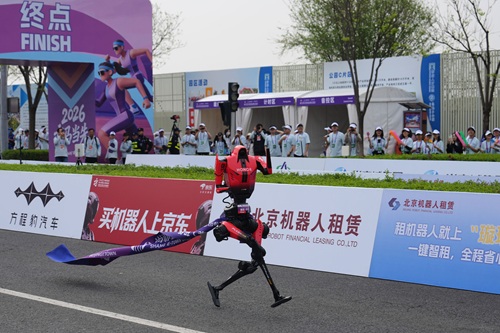
“A humanoid robot has stunned spectators in Beijing after reportedly completing a race pace faster than the human half-marathon world record, showcasing the rapid progress of robotics and artificial intelligence.
The machine demonstrated remarkable speed, balance, and endurance during the event, drawing widespread attention from engineers, athletes, and technology enthusiasts alike.
Half-marathon racing covers 21.1 kilometers and demands sustained pace, efficient movement, and stamina. For a humanoid robot to match—or surpass—elite human benchmark speeds marks a major milestone in robotic locomotion.
Developers said the robot’s performance was made possible through advanced motion control systems, lightweight materials, high-efficiency motors, and real-time balance correction powered by AI.
Experts caution that robotic race performances differ from official athletic records, since machines operate under different conditions and are not directly comparable to human competition. However, they agree the achievement reflects major engineering progress.
The demonstration has sparked debate about the future role of robots in sport, logistics, rescue missions, and physically demanding environments where speed and endurance matter.
Supporters called the moment symbolic of a new era in human-machine capability, while others emphasized that athletic records remain a celebration of human physiology and spirit.”
The machine demonstrated remarkable speed, balance, and endurance during the event, drawing widespread attention from engineers, athletes, and technology enthusiasts alike.
Half-marathon racing covers 21.1 kilometers and demands sustained pace, efficient movement, and stamina. For a humanoid robot to match—or surpass—elite human benchmark speeds marks a major milestone in robotic locomotion.
Developers said the robot’s performance was made possible through advanced motion control systems, lightweight materials, high-efficiency motors, and real-time balance correction powered by AI.
Experts caution that robotic race performances differ from official athletic records, since machines operate under different conditions and are not directly comparable to human competition. However, they agree the achievement reflects major engineering progress.
The demonstration has sparked debate about the future role of robots in sport, logistics, rescue missions, and physically demanding environments where speed and endurance matter.
Supporters called the moment symbolic of a new era in human-machine capability, while others emphasized that athletic records remain a celebration of human physiology and spirit.”