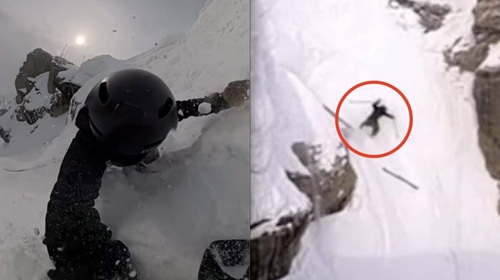
One of the most remarkable — and startling — stories in extreme skiing history involves Norwegian freeskier Fred Syversen, whose unintentional cliff flight in March 2008 resulted in what many consider the highest ever documented cliff drop on skis.
While filming a ski project in the Alps, Syversen missed his intended line and, travelling at around 50 mph (80 km/h), was carried over the edge of a huge 352-foot (107 m) cliff — far higher than typical big-mountain jumps.
Incredibly, instead of tragedy, the mishap became legendary: Syversen survived the fall and walked away from the snow-cushioned landing with relatively minor injuries, later emerging from the deep snow and skiing down under his own power.
Unlike planned feats of daring such as the intentional 255-foot cliff jump set by American skiing icon Jamie Pierre back in 2006, which was carefully executed as a world-record attempt, Syversen’s jump was accidental — making it all the more astonishing among the ski community and extreme sports fans alike.
Though some purists debate whether an unintentional fall should count as a “record,” Syversen’s 352-foot drop remains a legendary moment in skiing lore — a stark reminder both of the sport’s inherent unpredictability and of the thin line between calamity and near-mythic survival.