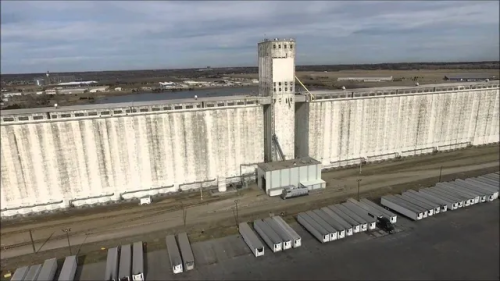
World’s Largest Grain Elevator complex, a vast network of towering concrete silos that once formed the backbone of global grain trade. Located along the Buffalo River and Lake Erie waterfront, these massive structures transformed the city into one of the most important agricultural and industrial hubs of the late 19th and early 20th centuries.
Buffalo’s rise as a grain-handling powerhouse began with the opening of the Erie Canal, which connected the Great Lakes to the Atlantic Ocean. Grain harvested from the American Midwest arrived by ship, was stored and transferred in Buffalo’s elevators, and then transported east to major population centers. To handle this enormous flow, engineers designed unprecedented storage facilities, resulting in an immense concentration of grain elevators unlike anywhere else in the world.
At their peak, Buffalo’s grain elevators could store millions of tons of grain at a time. Built primarily from reinforced concrete, many of the structures were engineering marvels, designed for durability, efficiency, and fire resistance. Their towering cylindrical forms later inspired modernist architects, who admired the elevators for their functional beauty and raw industrial design.
Although changes in shipping routes and transportation technology reduced Buffalo’s role in grain handling, the elevators remain powerful symbols of the city’s industrial legacy. Some have been preserved or repurposed into cultural venues, art spaces, and waterfront attractions, while others stand as silent monuments to an era that shaped global food distribution.