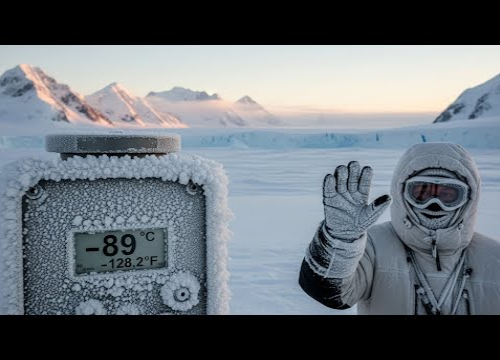
In one of the most extreme examples of nature’s power, scientists recognize Antarctica as the coldest place on Earth, with the lowest natural air temperature ever reliably recorded: a staggering −89.2 °C (−128.6 °F) at Vostok Station on 21 July 1983.
Located deep inland on the East Antarctic Ice Sheet, Vostok Station a Russian research outpost at high elevation endured conditions that pushed the limits of physical endurance and scientific equipment. At such extreme lows, exposed human skin can freeze in seconds, metals become brittle enough to snap, and ordinary machinery struggles to function as moisture from breathing instantly freezes upon contact with the air.
These record temperatures aren’t just cold they are ‘beyond human imagination,’ providing a stark reminder of how harsh Earth’s polar climates can be. Remote yet crucial for climate science, Antarctica continues to fascinate researchers studying atmospheric patterns, ice dynamics, and the impact of global climate change on the planet’s icy extremes.
While satellite measurements in other parts of the East Antarctic Plateau have suggested even colder surface temperatures, the ‑89.2 °C mark remains the official record recognized by standard ground‑based instruments