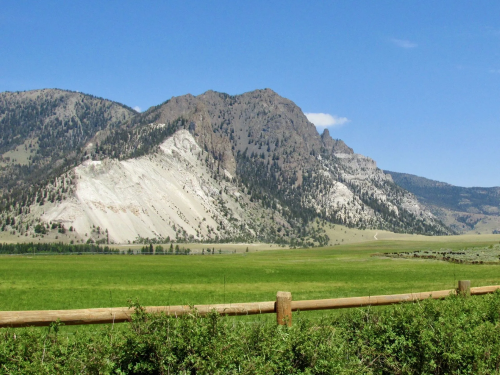
Geologists recognize the Heart Mountain landslide in northwestern Wyoming as the largest known sub-aerial landslide on Earth, a prehistoric geological event of staggering scale that reshaped the landscape roughly 49 million years ago.
During this colossal slide, an enormous slab of Paleozoic sedimentary and volcanic rock — estimated at thousands of cubic kilometers in volume — detached and traveled more than 45 km (28 miles) across a nearly flat surface before coming to rest. This extraordinary movement of rock across such a gentle slope has challenged scientists for decades and remains a key subject of research into landslide mechanics.
The event produced striking geological features that can still be seen today near Heart Mountain and surrounding areas, where massive limestone blocks rest far from their original positions and testify to the immense power of Earth’s processes.
While other landslides — both subaerial and submarine — have occurred throughout Earth’s history, the Heart Mountain slide’s scale and preserved evidence make it a unique record of ancient geologic activity above sea level.