More than 4,500 years ago, long before the rise of classical civilizations such as Rome or Greece, the people of the Indus-Saraswati Civilization were already creating symbolic imagery that resonates with concepts of meditation and inner awareness seen even today.
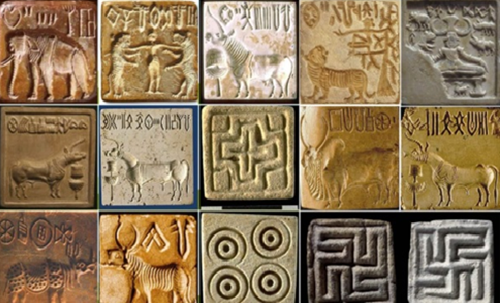
One of the most iconic artifacts from this Bronze Age culture the Pashupati Seal, dating to around c. 2500 BCE depicts a horned figure seated in a posture that many scholars interpret as reminiscent of meditative or yogic positions. The figure, often surrounded by animals and wearing a distinctive headdress, has been associated by early archaeologists with a proto-Shiva or “Lord of Animals” motif, reflecting early spiritual expression on the Indian subcontinent.
Excavated from the ancient urban site of Mohenjo-Daro in what is now Pakistan, the steatite seal is remarkable not only for its artistic complexity — rare among Indus seals but also for what it suggests about early philosophical and ritual practices. Some modern interpretations connect the posture of the central figure with early forms of dhyana (meditation) and suggest that contemplative disciplines may have been culturally significant long before they were codified in later texts.
While the precise meaning of the seal and its symbols remains debated among scholars with interpretations ranging from depictions of deities to representations of ritual specialists it undeniably testifies to the sophistication and spiritual depth of one of the world’s earliest urban civilizations.