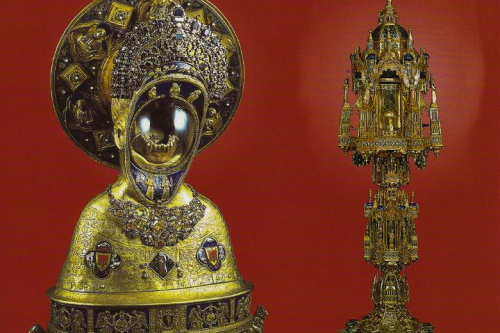
Inside the Basilica di Sant’Antonio, visitors encounter one of the Catholic Church’s most unusual relics: the preserved jaw and tongue of Saint Anthony of Padua. The relics, displayed in a gilded, jewel-encrusted reliquary bust, continue to fascinate pilgrims, historians, and curious tourists alike.
The relics’ story dates back to 1263, when Saint Anthony’s tomb was officially opened more than 30 years after his death. Church records indicate that most of his body had decomposed over time, but remarkably, his jaw and vocal organs were found intact. Clergy at the time interpreted this preservation as a testament to his extraordinary powers as one of the Middle Ages’ most renowned preachers.
Rather than returning the remains to the tomb, officials placed them in an ornate reliquary bust adorned with gold, enamel, gemstones, and miniature religious figures. Today, the jaw remains visible behind protective glass in the Basilica’s Chapel of the Relics, where it continues to draw thousands of visitors each year.
The event is commemorated annually in Padua during the Feast of the Tongue, a celebration honoring the moment the relics were revealed. For devotees and historians alike, the relics of Saint Anthony serve as both a symbol of religious devotion and a unique window into medieval beliefs about sanctity, miracles, and the human body.
Scholars note that while such relics may appear unusual to modern observers, they reflect a deep tradition in Catholicism of preserving physical remains to inspire faith and veneration. In Padua, the jaw and tongue of Saint Anthony remain a powerful testament to his enduring influence over the centuries.