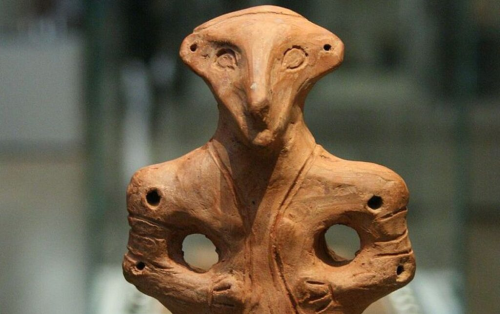
Long before the rise of ancient Egypt, the Indus Valley Civilization, or early Chinese dynasties, a mysterious culture in southeastern Europe was crafting objects that still puzzle researchers today. Known as the Vinča clay figurines, these artifacts date back nearly 7,000 years, placing their creation around 5000 BCE.
Discovered primarily in the Vinča region near present-day Belgrade, Serbia, these figurines are among the most enigmatic relics of prehistoric Europe. Sculpted from clay, they often feature elongated bodies, abstract forms, and strikingly stylized faces. Many appear humanoid, while others blur the line between human and symbolic representation.
What makes the Vinča figurines especially intriguing is the complete lack of written records explaining their purpose. Unlike later civilizations that left behind texts, monuments, or inscriptions, the Vinča culture vanished without clear documentation. Scholars have proposed various theories, suggesting the figurines may have served religious, ritualistic, or social roles, but no single explanation has been universally accepted.
Archaeological evidence shows that the Vinča people were remarkably advanced for their time. They practiced early agriculture, lived in large settlements, and developed complex pottery and metallurgy. The figurines may reflect a sophisticated belief system or social structure far more complex than previously assumed for Neolithic societies.