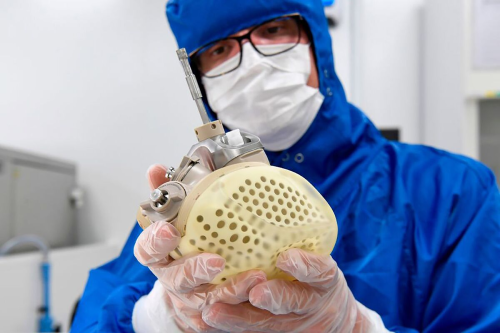
In a landmark advancement for medical science, France has unveiled the Carmat artificial heart, a revolutionary device designed to replicate the natural function of the human heart while offering hope to patients awaiting transplants. Developed with aerospace-grade sensors and biocompatible materials, the Carmat heart adjusts in real time to the body’s physiological needs, closely mimicking the rhythm and responsiveness of a natural heart.
Unlike traditional heart transplants, which rely on scarce human donors, the Carmat artificial heart provides a fully functional, mechanical alternative. The device is powered by external batteries, granting patients mobility and independence, while supporting their survival for extended periods. Early clinical trials indicate that recipients can live for months to years with the device, significantly improving quality of life and long-term prognosis.
Medical experts highlight the Carmat heart as a game-changer in addressing donor shortages and long waiting lists—challenges that have long limited access to life-saving heart transplants. Its adaptive technology ensures that the heart responds dynamically to a patient’s activity level, stress, and health changes, offering an unprecedented level of precision and safety.
The development also marks a significant step forward in biomedical engineering, combining mechanical innovation, material science, and patient-centered design. Researchers hope that widespread adoption of devices like the Carmat heart could redefine cardiac care globally, potentially saving thousands of lives and providing a viable alternative for patients who might otherwise face fatal delays.