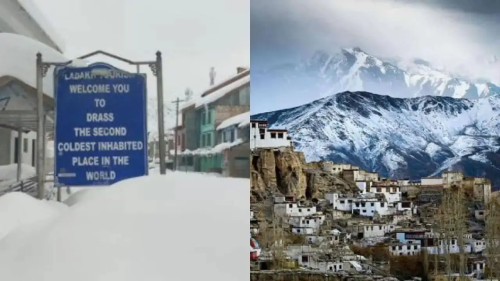
In the heart of the Himalayas, the small town of Drass in Ladakh has recently recorded a staggering –40°C, earning its place as the second coldest inhabited location in the world, after Oymyakon, Russia. Despite the extreme temperatures, life in this icy frontier continues with remarkable resilience, showcasing the indomitable spirit of its residents.
As dawn breaks over snow-draped valleys, shops open their shutters, and children, bundled in layers of clothing, make their way to school like intrepid explorers. Shepherds lead their flocks across frozen pastures, while locals break through solid ice in streams to fetch water — routines that have been repeated for generations, forming the lifeblood of the town.
Meteorologists explain that Drass experiences such severe cold due to its unique topography, which traps dense, frigid air in the valleys, creating a natural “cold-air trap.” Combined with high altitude and clear skies, this effect produces bone-chilling winter conditions rarely seen anywhere else in India.
Yet, for Drass’s inhabitants, this is simply home. Families have adapted to the extreme climate with traditional housing, warm clothing, and communal resilience. Daily life continues, undeterred by the frost that blankets the town in sparkling ice each morning.
Drass stands as a testament to human adaptability in some of the harshest climates on Earth, proving that even when temperatures plummet to –40°C, the warmth of community, tradition, and perseverance keeps life alive and thriving.