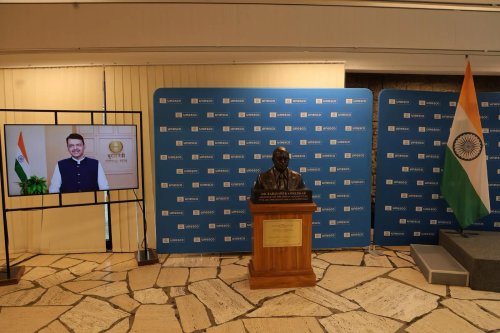
In a landmark moment for India and a significant recognition on the global stage, the UNESCO headquarters in Paris unveiled a statue of Dr. Bhimrao Ramji Ambedkar, one of the world’s most influential thinkers on equality, human rights, and democracy. This historic installation marks the first time that any international organisation has placed a statue of Dr. Ambedkar within its headquarters, symbolising the profound global impact of his ideas.
The ceremony drew diplomats, scholars, and representatives from various nations, all acknowledging Ambedkar’s unparalleled contribution to social justice, constitutional democracy, and education. For India, the event stands as a powerful affirmation of the nation’s democratic ethos and the universal relevance of Ambedkar’s vision.
UNESCO officials highlighted that Dr. Ambedkar’s teachings—equality, dignity, social justice, education for all, and democratic empowerment—hold vital importance not just for India, but for societies around the world striving for fairness and inclusion. His intellectual legacy continues to inspire movements for human rights across continents, from Asia to Africa to the Americas.
The statue’s installation serves as a reminder that Ambedkar was not only the chief architect of the Indian Constitution but also one of the most influential global voices of the 20th century on civil liberties and social reform. By placing his statue within its Paris headquarters, UNESCO has acknowledged his role as a universal symbol of human dignity and transformative leadership.
For millions across the world, this moment stands as a tribute to Ambedkar’s enduring message: a society progresses only when every individual receives equal opportunity, respect, and justice. This historic recognition will continue to inspire generations and reinforce India’s long democratic journey on the international stage.