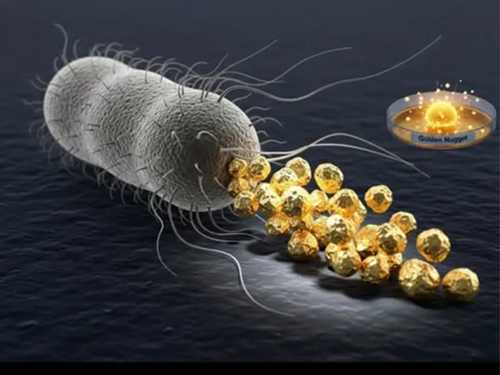
In a remarkable scientific discovery, researchers have identified a bacterium capable of transforming toxic metals into gold nanoparticles. The microbe, named Cupriavidus metallidurans, thrives in environments rich in metals such as gold, copper, and cadmium — areas where most organisms cannot survive.
What makes this bacterium extraordinary is its ability to process hazardous metals and release gold as waste, a phenomenon explained by the process of biomineralization. Through its natural metabolic pathways, Cupriavidus metallidurans breaks down toxic compounds and converts them into tiny solid gold particles, essentially “eating” metal and “pooping” gold.
Scientists believe this discovery has far-reaching implications for environmental cleanup and resource recovery, as the bacterium can detoxify polluted areas while producing valuable gold nanoparticles. This unique ability could potentially lead to innovative techniques in bioremediation, nanotechnology, and sustainable mining.
While the research is still in early stages, experts are excited about the potential of harnessing microbial metabolism for practical applications, turning hazardous waste into precious resources and offering a new frontier in microbiology and materials science.
This finding not only challenges our understanding of microbial capabilities but also demonstrates the astonishing ways nature can convert danger into value, opening up possibilities once considered science fiction.