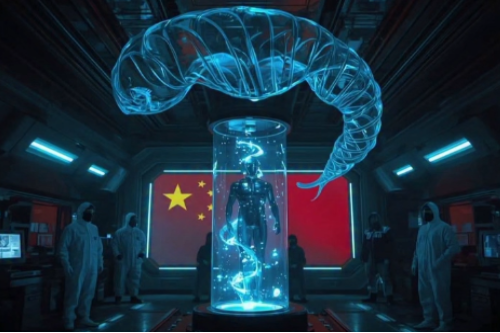
In 2025, reports emerged that researchers in China were investigating whether human cells could be made more resilient by integrating tardigrade DNA — the same genetic material that allows water bears to survive extreme conditions including radiation, freezing temperatures, dehydration, and even the vacuum of space.
The research is not aimed at creating “superhumans,” but rather at enhancing cellular resilience, potentially enabling the human body to better withstand harsh environments. Tardigrade proteins are known for their ability to stabilize DNA and prevent cellular damage under conditions that would normally be fatal to humans.
If scientists can safely harness these protective traits, the implications could be profound for medicine, space exploration, and emergency survival technologies. Potential applications include improving the human body’s ability to endure radiation during deep-space missions, enhancing recovery from injuries, or increasing resistance to environmental stresses.
Despite its promise, the research is in early stages and remains controversial, raising ethical, safety, and regulatory questions about the limits of genetic engineering in humans. Nevertheless, this pioneering work underscores how nature’s toughest organism might one day offer solutions to challenges once considered insurmountable.
Experts emphasize that while the concept may sound like science fiction, it represents a cutting-edge intersection of biotechnology and human resilience research, reflecting the global race to understand and apply nature’s most extraordinary survival mechanisms.