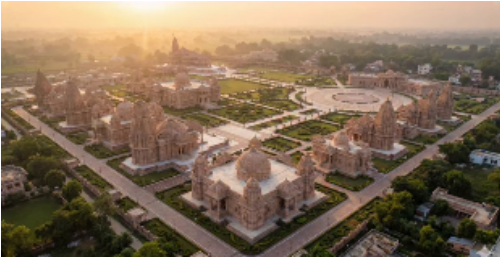
In a significant boost to India’s cultural and religious tourism, the Uttar Pradesh government has approved the expanded plan to build a world-class Temple Museum in Ayodhya. Originally proposed on 25 acres, the project area has now been increased to 52.102 acres following a request from the Tata Group, taking into account the museum’s grand scale and vision.
The museum will be developed and operated by the Tata Group under their Corporate Social Responsibility (CSR) initiative. To ensure effective governance and management, a Section 8 company (Non-Profit SPV) will be formed, which will include representatives from both the Central Government and the Uttar Pradesh Government.
The museum aims to showcase India’s rich temple architecture, cultural heritage, and history using modern technology and interactive displays. Visitors will be able to explore the diversity of India’s temple art, design, rituals, and regional traditions in an immersive environment.
Officials believe that the museum will help establish Ayodhya as a global cultural and religious tourism hub, attracting visitors from across India and around the world. Beyond tourism, the project is expected to generate employment opportunities, boost local businesses, and promote a wide range of cultural activities in the region.
The initiative reflects a collaborative effort between corporate India, state authorities, and the central government to preserve and promote India’s historical and spiritual heritage while leveraging modern technology for educational and experiential tourism. Once completed, the Ayodhya Temple Museum is expected to become a landmark destination symbolizing the confluence of tradition and innovation in India’s cultural landscape.