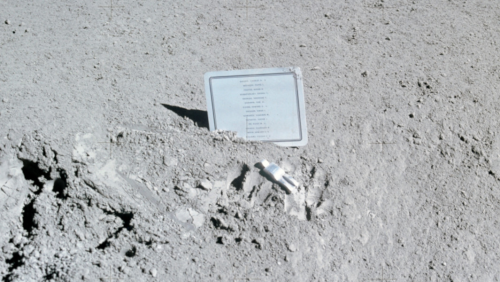
More than five decades ago, a small piece of art quietly made history by becoming the first sculpture ever placed on the Moon—a tribute not of politics or technology, but of human courage and sacrifice. Known as “Fallen Astronaut,” the tiny aluminium figure honours astronauts and cosmonauts who lost their lives in the pursuit of space exploration.
This historic moment unfolded during NASA’s Apollo 15 mission in July 1971. Astronaut David Scott, commander of the mission, secretly carried the 8.5-centimetre sculpture created by Belgian artist Paul Van Hoeydonck. On August 1, 1971, he placed it on the lunar surface near Hadley Rille, alongside a plaque listing the names of eight American astronauts and six Soviet cosmonauts who had died up to that point.
The gesture was intentionally humble: no grand announcements, no political messages—just a silent salute on a silent world.
What makes the story remarkable is that the sculpture was not part of NASA’s official agenda. Scott worked privately with the artist, ensuring the memorial remained non-commercial and apolitical. After the mission returned, NASA publicly acknowledged the sculpture’s existence, sparking global interest and highlighting the shared human cost behind the space race.
Today, Fallen Astronaut still lies undisturbed on the lunar dust—an enduring symbol of unity at a time when the world was divided by Cold War rivalries. Space historians believe it will remain there for millions of years, preserved in the Moon’s airless environment, long after the footprints and flag have faded.
With renewed interest in returning humans to the Moon through the Artemis program, many see this small sculpture as a reminder of the bravery and sacrifice behind humanity’s exploration of the unknown.
What began as a quiet tribute has become one of space history’s most poignant and powerful artistic statements—a monument not on Earth, but among the stars.