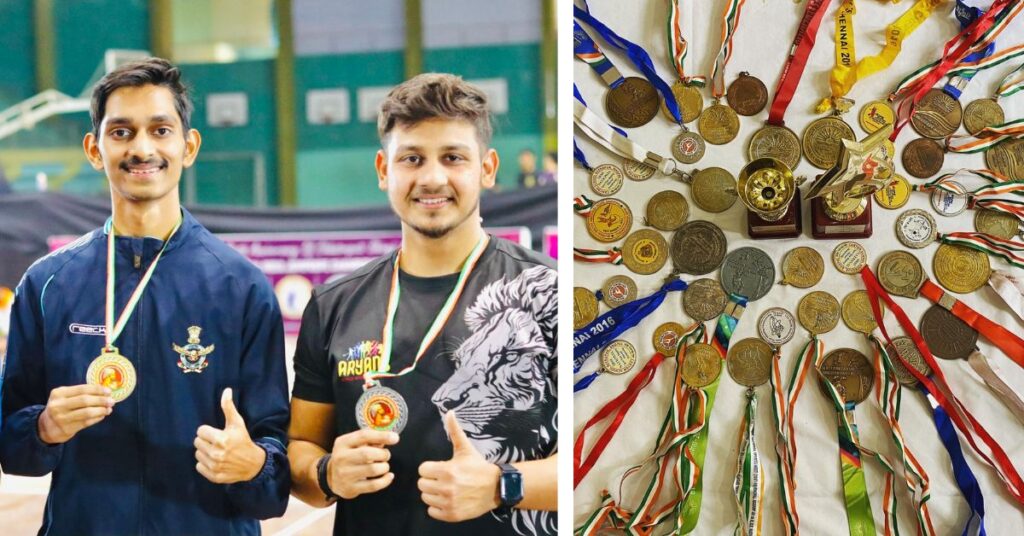
Every evening in a modest rented flat tucked away in the bustling lanes of Mumbai, 20-year-old Praveen Gupta clears a small space in his home — not for relaxation, but for the relentless pursuit of his passion: rope skipping.
With no access to a gym, training facility, or personal coach, Praveen’s arena is his living room, his equipment a simple jump rope, and his discipline his greatest weapon. Carefully shifting furniture, he takes off his shoes so as not to disturb the neighbours, sets a 30-second timer, and begins — the rhythmic sound of the rope slapping the floor echoing his determination.
“I’ve been playing this sport since childhood. It’s never monotonous,” says Praveen. “I struggled at first when learning new skills, but over time, I picked up the pace and improved.”
Praveen’s journey is a testament to passion over privilege. In a city where space is scarce and sporting infrastructure is often limited to the elite, he has built a world-class mindset within four walls. His daily routine involves perfecting new tricks, timing his sets with precision, and studying videos of professional skippers online to teach himself what formal training could not offer.
His dedication is slowly earning attention on social media platforms, where videos of his crisp, clean moves and creative skipping sequences have gone viral among fitness enthusiasts and aspiring athletes alike.
Sports psychologists and trainers agree that Praveen’s story is emblematic of a larger movement — where young athletes from humble backgrounds are redefining what it means to train and succeed, even without traditional support systems.
As he continues to skip in silence, with only the timer and his own rhythm as company, Praveen Gupta reminds us that sometimes the loudest victories are born in the quietest corners.