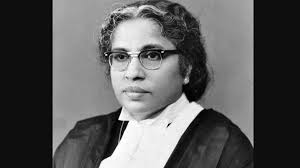
Anna Chandy was born in 1905 in Kerala, India, into a progressive family. She graduated in law in 1930, a remarkable achievement for a woman at a time when the legal profession was predominantly male.
Anna Chandy actively participated in public life and was a member of the Travancore Legislative Council during 1923-24, contributing to legislative reforms during the pre-independence period. In 1937, she was appointed as a Munsif (a judicial officer) in the erstwhile state of Travancore, becoming one of the first women to serve in the judiciary.
In 1948, she was promoted to the position of district and sessions judge, marking another milestone in her career and in the history of women in law in India. In 1959, Anna Chandy was appointed as a judge of the Kerala High Court, becoming the first woman to serve in this prestigious position in the state. Her appointment was a monumental achievement, breaking gender barriers within the judicial system.
Anna Chandy was known for her commitment to justice and her work towards social reforms. She handled many important and challenging cases, contributing significantly to the evolution of the legal system in post-independence India. As a member of the Travancore Legislative Council, she advocated for social reforms and the empowerment of women and marginalized communities.
Anna Chandy was one of the first women to break into the legal profession, which was dominated by men at the time. Her entry into high judicial positions was groundbreaking and served as an inspiration for future generations of women in law. She played a crucial role in shaping the role of women in the Indian judiciary and was an advocate for gender equality and social justice.Legacy:
Anna Chandy’s legacy lives on as a trailblazer for women in law. Her career opened doors for other women to follow in her footsteps and pursue careers in the judiciary. She remains an influential figure in the history of Kerala’s legal system and India’s broader judicial development.
Anna Chandy’s career as the first woman judge of the Kerala High Court was a trailblazing achievement that not only marked a turning point for her but also for women in India. Her dedication to justice and reform has made her a key figure in Indian legal history.