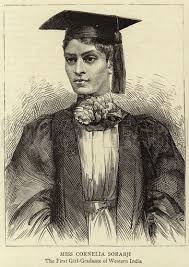
Cornelia Sorabji became the first woman to graduate in law in India in 1894, completing her studies at Somerville College, Oxford. Her achievement was extraordinary, breaking barriers in a society where women were typically confined to domestic roles. Despite her academic success, Sorabji faced significant gender-based discrimination, which made it difficult to practice law immediately. The legal profession was male-dominated, and women were rarely permitted to practice in courts during that era.
Sorabji was finally enrolled in the Allahabad High Court Bar in 1923, after a 29-year wait due to societal restrictions on women. Even after enrollment, her professional role was limited, focusing on purdah-nashin women and working primarily outside the courtroom. Sorabji was a strong advocate for women’s and children’s rights, particularly in family law matters.
She handled cases involving the guardian rights of women and children, addressing injustices rooted in traditional practices. Sorabji campaigned for reforms to expand women’s legal rights during British colonial rule. Sorabji’s most significant work involved providing legal assistance to purdah-nashin women, enabling them to manage legal affairs.
She fought against child marriage and worked for the rights of widows and marginalized groups, contributing to social reform. Sorabji’s pioneering efforts opened the doors for future generations of women in law in India.
Beyond her legal career, she was a social reformer, advocating for women’s education and professional opportunities.
Her work laid the groundwork for the women’s empowerment movement in India, increasing the participation of women in the legal profession.
Cornelia Sorabji’s life exemplifies the resilience and determination of a woman who overcame societal and cultural barriers to achieve success in a male-dominated field.
Her contributions to women’s legal rights and social reform had a lasting impact, inspiring future generations to pursue careers in law and beyond.