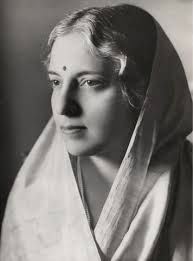
Vijaya Lakshmi Pandit (1900–1990) was a pioneering Indian political leader, diplomat, and social activist who achieved several significant milestones in both Indian and global politics. Her contributions marked her as one of the leading women figures in Indian history.
In 1937, Vijaya Lakshmi Pandit made history by becoming the first woman cabinet minister in India when she was elected to the provincial legislature of the United Provinces (now Uttar Pradesh). She served as the minister for local government and health in the provincial government formed by the Indian National Congress.
This appointment marked a significant achievement for women in Indian politics and set a precedent for women’s participation in political leadership roles. Pandit was a key figure in India’s post-independence diplomacy, serving in several high-profile positions.
She was appointed as India’s ambassador to the Soviet Union in 1947, making her the first woman to hold such a high-ranking diplomatic post.
She also represented India at the United Nations and was one of the prominent figures in promoting India’s global interests.
In 1953, Vijaya Lakshmi Pandit achieved a historic milestone by becoming the first woman to be elected as the president of the United Nations General Assembly (UNGA).
She served as president from September 1953 to September 1954, a prestigious role where she helped steer several important international discussions.
Her leadership at the UNGA showcased her diplomatic skills and earned her international recognition as one of India’s foremost women diplomats.
Pandit was involved in India’s political and social movements, particularly in the Indian National Congress (INC), and played a significant role in the country’s freedom struggle.
After India gained independence in 1947, she continued to be active in public life, holding various key positions and contributing to the strengthening of democratic institutions in India. She was the sister of Jawaharlal Nehru, the first Prime Minister of India, and the daughter of Motilal Nehru, a prominent nationalist leader.
Pandit’s family played a crucial role in the Indian independence movement, and her contributions, alongside those of her brother and father, were integral to the shaping of modern India. She was also a strong advocate for women’s rights, and her political career inspired future generations of women leaders in India and across the world.
Pandit’s leadership and diplomacy earned her many accolades and recognition both within India and internationally. She remained a respected figure throughout her life and was admired for breaking barriers for women in politics and international relations.
Vijaya Lakshmi Pandit’s career is a testament to her determination, vision, and the breaking of gender barriers in Indian and global politics. She is remembered not only as India’s first woman cabinet minister but also as a trailblazer who paved the way for women in diplomacy and international relations, leaving a lasting impact on the political landscape.