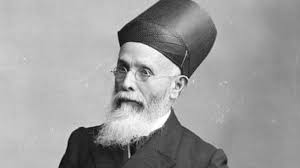
Dadabhai Naoroji was born on September 4, 1825, in Bombay (now Mumbai), India. He was a distinguished scholar, educator, and businessman, who played a significant role in India’s early struggle for independence.
Naoroji was one of the first Indians to receive a professorship at Elphinstone College in Bombay, where he taught mathematics and natural philosophy.
In July 1892, Dadabhai Naoroji made history by becoming the first non-white member of the British House of Commons. He was elected as a Liberal Party MP from the Central Finsbury constituency in London. His election was groundbreaking, symbolizing the growing political engagement of Indians in the British Empire.
Naoroji won his seat by a margin of just three votes, highlighting the close contest and the significant support he garnered despite the racial prejudices of the time.
During his tenure from 1892 to 1895, Naoroji used his position to advocate for Indian self-rule and economic justice. He highlighted the economic exploitation of India by the British, a theme central to his “Drain Theory,” which argued that British policies were draining India of its wealth.
Naoroji’s presence in Parliament brought attention to India’s plight and influenced British policies towards more progressive reforms in India.
Naoroji earned this title for his tireless work towards Indian independence, economic reform, and his mentorship of younger leaders, including Mahatma Gandhi.
He was one of the founding members of the Indian National Congress and served as its president thrice (1886, 1893, 1906), shaping the early strategies of the independence movement.
Dadabhai Naoroji’s pioneering role in British and Indian politics, along with his advocacy for justice and equality, continues to inspire generations. His work laid the foundation for India’s struggle for independence and highlighted the importance of representation and advocacy in governance.