The creation of Andhra State in 1953 and its subsequent merger with Hyderabad State to form Andhra Pradesh in 1956 is one of the most significant events in India’s post-independence political history. This event was pivotal in shaping India’s approach to linguistic reorganization and served as a model for other states to be formed on linguistic lines. Below is a detailed exploration of the formation of Andhra and Andhra Pradesh, along with its legacy.
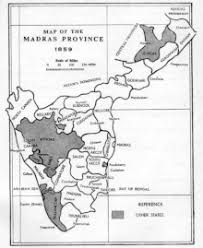
On 1 October 1953, the Andhra State was formed by carving out the Telugu-speaking areas from the Madras State. This made it the first state in independent India to be created on a linguistic basis, marking a significant step in the reorganization of India’s states after independence.
- The Potti Sriramulu Agitation: The demand for a separate state for Telugu-speaking people was initially raised in the 1930s, but it gained significant momentum in the early 1950s. Potti Sriramulu, a prominent political leader and freedom fighter, led a hunger strike demanding a separate state for Telugu speakers. His fast lasted for 56 days, and his death on 15 December 1952 became a major turning point in the movement. The tragic event mobilized public opinion, putting pressure on the government to create a separate state.
- Public Support: Sriramulu’s death galvanized the people of Andhra Pradesh, and there were widespread protests and demonstrations across the Telugu-speaking regions. The Indian government could no longer ignore the demands, and it led to the formation of Andhra State in 1953, making it the first linguistic state post-independence.
- Capital at Kurnool: Initially, Kurnool was chosen as the capital of the newly created Andhra State. However, this was a temporary arrangement, as the state was later merged with other Telugu-speaking areas.
On 1 November 1956, Andhra State was merged with the Telugu-speaking regions of Hyderabad State as per the recommendations of the States Reorganisation Commission (SRC). This merger resulted in the formation of the new, larger state of Andhra Pradesh.
- States Reorganisation Commission: The SRC, established in 1953, recommended the reorganization of Indian states on linguistic lines. The idea was to create states that would represent the linguistic and cultural identities of their people. As a result, the Telugu-speaking regions of Hyderabad State were merged with Andhra State to form Andhra Pradesh.
- Capital Shift to Hyderabad: With the merger, the capital of the newly formed state of Andhra Pradesh was shifted from Kurnool to Hyderabad, a city that had a significant Telugu-speaking population. Hyderabad had been the capital of the erstwhile Hyderabad State and was retained as the capital due to its economic, political, and cultural importance.
The creation of Andhra Pradesh marked a significant milestone in India’s history, influencing the subsequent linguistic reorganization of states and the States Reorganisation Act of 1956. The event set a precedent for the creation of states based on language, a practice that continues to influence India’s political landscape today.
- Linguistic Reorganization of States: Andhra Pradesh’s creation was a direct result of the push for the recognition of linguistic identities within India. This laid the groundwork for the States Reorganisation Act of 1956, which reorganized the Indian states based on linguistic lines, ensuring greater political and administrative coherence for people who spoke the same language.
- Cultural Unity: The formation of Andhra Pradesh helped bring together Telugu-speaking people from different regions, fostering a sense of unity and cultural identity. The state became a hub for Telugu culture, arts, literature, and cinema, with a strong emphasis on the preservation and promotion of the Telugu language and heritage.
- Political Influence: Andhra Pradesh became one of the largest and most populous states in India. The state’s political leadership, led by figures like Nandamuri Taraka Rama Rao (NTR) and N. Chandrababu Naidu, played a prominent role in national politics, particularly through the Telugu Desam Party (TDP), which focused on promoting the welfare of the Telugu-speaking people and the state’s development.
- Economic Development: Over the years, Andhra Pradesh has seen significant economic growth, particularly in agriculture, industries, and technology. The state has been one of the leaders in agriculture, especially rice production, and it has become an emerging hub for information technology (IT) and business outsourcing.
In 2014, Andhra Pradesh underwent a significant transformation with the bifurcation of the state. The formation of Telangana as a separate state marked the end of Andhra Pradesh’s decades-long unity.
- Telangana Movement: The demand for a separate state of Telangana had been simmering for several decades, driven by cultural, economic, and political differences between the regions of Rayalaseema, Coastal Andhra, and Telangana. The movement gained momentum in the early 2000s, and after extensive agitation, the bifurcation was approved in 2013.
- Telangana Formation: On 2 June 2014, Telangana was officially formed, and it became the 29th state of India. The bifurcation led to the creation of a new capital for Andhra Pradesh, Amaravati, which was envisioned as a modern city to drive the state’s growth.
- Hyderabad as Joint Capital: Following the bifurcation, Hyderabad was designated as the joint capital for both Telangana and Andhra Pradesh for a period of 10 years, with the capital of Andhra Pradesh being moved to Amaravati.
The formation of Andhra State in 1953 and the subsequent creation of Andhra Pradesh in 1956 was a landmark event in the history of India’s political organization. It was the first state to be formed on the basis of linguistic identity and set a precedent for the linguistic reorganization of India’s states. Over the years, Andhra Pradesh has evolved as a major cultural, economic, and political force in India. However, the bifurcation of the state in 2014, leading to the formation of Telangana, represents a new chapter in the state’s history, highlighting the ongoing importance of regional identity and the evolving dynamics of India’s political landscape.