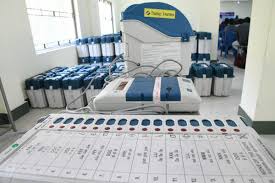
Electronic Voting Machines (EVMs) were first used in India during the assembly by-elections in Kerala in April 1982. The trial use took place in the Paravur and Neyyattinkara constituencies. This initial deployment aimed to test the feasibility of EVMs in a real election scenario and address issues such as vote counting delays and inaccuracies associated with paper ballots.
The development of EVMs was led by the Electronics Corporation of India Ltd (ECIL), in collaboration with the Indian Institute of Technology (IIT) Kanpur. EVMs were introduced to modernize the election process, focusing on making it more efficient, secure, and transparent.
The machines represented a significant technological leap, incorporating electronic systems to handle voting and counting processes. EVMs replaced the traditional paper ballot system, eliminating issues such as printing errors, ballot box stuffing, and invalid votes due to unclear markings. Vote counting became significantly faster, reducing the time taken to announce results from days to just a few hours.
The accuracy of the results improved, minimizing human errors in vote counting.EVMs offered enhanced security features, making it difficult to tamper with the voting process. The machines were designed to prevent double voting and ensure that each vote was counted correctly.
Following the successful trial in Kerala, EVMs were introduced gradually in other elections to further test and refine their functionality. EVMs were used in a limited number of constituencies during the 1999 general elections.
By the 2004 general elections, EVMs were deployed across the entire country for all parliamentary constituencies, marking a complete transition from paper ballots to electronic voting.
EVMs are now standard in all types of elections in India, including Lok Sabha, state assembly, municipal, and panchayat elections.
Over the years, EVMs have undergone several upgrades to enhance their reliability, security, and user-friendliness.
Newer models include features like Voter Verifiable Paper Audit Trail (VVPAT), which allows voters to verify their votes, adding an extra layer of transparency.
Electronic Voting Machines (EVMs) were first introduced in India during the assembly by-elections in Kerala in April 1982. Developed by the Electronics Corporation of India Ltd (ECIL) in collaboration with IIT Kanpur, EVMs revolutionized the Indian electoral process by enhancing efficiency, accuracy, and security. After a gradual implementation phase, EVMs became standard across the country by the 2004 general elections. Today, EVMs are a critical component of India’s electoral infrastructure, continuously evolving to ensure the integrity and transparency of elections.