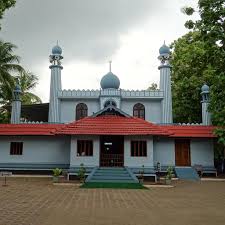
The Cheraman Juma Masjid in Kodungallur, Thrissur District, Kerala, is traditionally believed to have been established in 629 CE, making it one of the oldest mosques in India. According to local legend, the mosque was founded by Malik Bin Dinar, a companion of the Prophet Muhammad, who was invited to Kerala by the Chera king, Cheraman Perumal. The king, after witnessing the splitting of the moon—a miracle attributed to the Prophet—converted to Islam and later commissioned the construction of the mosque.
The mosque’s architecture reflects traditional Kerala styles, featuring a wooden roof and a central prayer hall. It has undergone several renovations over the centuries, with the most recent restoration completed in 2021, which included structural repairs and preservation of its historical features.
In contrast, the Adhai Din Ka Jhonpra in Ajmer, Rajasthan, is one of the earliest examples of Indo-Islamic architecture. Commissioned by Qutbuddin Aibak in 1192 CE, it was reportedly constructed using materials from dismantled Hindu and Jain temples, as noted by the Archaeological Survey of India. The mosque is renowned for its grand entrance, which features a large archway and inscriptions in Arabic, and is considered a precursor to the architectural style that would later be seen in the Qutub Minar in Delhi.
Both structures are significant historical landmarks, reflecting the rich tapestry of India’s religious and architectural heritage.