The Dashavatara Temple in Deogarh, Uttar Pradesh, is a significant example of early Gupta architecture, dating back to the 5th century CE. This temple is renowned for its intricate carvings and sculptures, many of which depict scenes from Hindu mythology, including stories of Lord Rama and Krishna.
The temple features a rudimentary shikhara, marking an early development in temple architecture during the Gupta period.
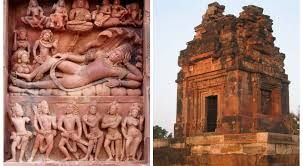
The temple’s exterior walls are adorned with sculptural reliefs illustrating various episodes from Hindu mythology. Notably, the central panel depicts Vishnu reclining on the serpent Ananta, floating on the cosmic ocean, a scene known as Anantasayana.
The temple is considered one of the earliest examples of the Panchayatana style, featuring a central shrine surrounded by four subsidiary shrines at the cardinal points. One of the panels portrays the story of Gajendra Moksha, where Lord Vishnu rescues the elephant Gajendra from a crocodile.
Another panel depicts the sages Nara and Narayana performing penance, symbolizing the duality of the divine. These artistic elements not only showcase the temple’s architectural grandeur but also provide valuable insights into the religious and cultural milieu of the Gupta period.