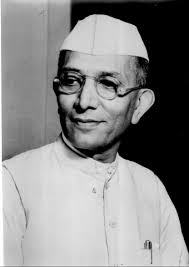
Morarji Desai was the fourth Prime Minister of India and is indeed known for being the first Prime Minister of India to resign without completing his full term. He served from March 24, 1977, to July 28, 1979.
Birth: Morarji Desai was born on February 29, 1896, in the village of Bhadeli, near Bulsar (now Valsad) in Gujarat, India, into a Gujarati Brahmin family.
Desai was educated in Bombay (now Mumbai) and joined the government service as a civil servant.
He worked in various administrative roles and later became the District Collector. His early career was marked by dedication to public service and efficiency.
Morarji Desai joined the Indian National Congress in the 1930s, and later, he became a prominent leader of the party.
Desai was closely associated with Gandhian ideals and was an advocate of non-violence and self-reliance.
He became the Chief Minister of Gujarat in 1960 and served for several years, gaining a reputation as a strong administrator.
Desai’s political career saw a turning point during the Emergency imposed by Indira Gandhi (1975-1977). During this period, he was a prominent figure in the opposition to the authoritarian rule of Indira Gandhi.
In 1977, after the end of the Emergency, the Janata Party, a coalition of opposition groups, emerged victorious in the general elections. The Janata Party came together to oppose the Indian National Congress led by Indira Gandhi.
Desai became the leader of the Janata Party and assumed office as Prime Minister of India after the Congress party was defeated in the elections.
Tenure as Prime Minister: Morarji Desai became the Prime Minister of India on March 24, 1977, after the Janata Party’s victory in the 1977 general elections.
First Non-Congress Prime Minister: Desai’s leadership marked a historic moment, as he became the first Prime Minister of India who was not from the Indian National Congress (INC). This represented a shift in the political landscape, as the Congress had dominated Indian politics since independence in 1947.
During his tenure, Desai worked to stabilize the economy and political system after the turmoil of the Emergency. He was also committed to dismantling many of the Emergency-era policies that had been imposed by Indira Gandhi, including the suspension of civil liberties and press censorship.
His government pursued a more conservative, pro-business, and pro-farmer agenda, aiming to restore democratic governance.
He advocated for anti-corruption measures and social reforms, though his government faced challenges in implementing many of these policies due to a lack of a coherent political and economic vision.
Morarji Desai’s tenure was marked by political instability. The Janata Party was a coalition of several ideologically diverse groups, which led to internal conflicts and disagreements.
Desai’s government faced difficulties in managing the coalition, particularly as various factions within the party began to pull in different directions.
In 1979, a major crisis erupted within the Janata Party over several issues, including economic policies and the handling of corruption cases.
Desai was also criticized for being unable to address internal factionalism and for failing to maintain a united front.
Due to growing political dissent, opposition from within his own party, and a loss of support, Morarji Desai resigned on July 28, 1979, without completing his full term as Prime Minister.
Morarji Desai’s resignation led to further instability within the Janata Party, and it eventually split into multiple factions. This paved the way for Indira Gandhi’s return to power in the 1980 general elections, when she and the Congress Party won a decisive victory.
Retirement: After resigning from office, Desai withdrew from active politics for a time. However, he continued to have an influence on Indian political life and remained active in public discussions.
Later Years: Desai was a leading figure in Indian politics even after his resignation. He remained an important figure in the Janata Party and was involved in various political movements.
In the 1980s, after the Janata Party’s decline, Desai became more of an elder statesman and was often sought for advice and guidance.
Death: Morarji Desai passed away on April 10, 1995, at the age of 99. He is remembered for his long life, dedication to public service, and his role in shaping India’s political landscape during the critical period of post-Emergency politics.
First Prime Minister to Resign Without Completing Term: Morarji Desai is remembered as the first Prime Minister of India to resign without completing his full term in office. His resignation highlighted the political instability of the Janata Party government and marked a significant turning point in Indian politics.
Champion of Integrity and Anti-Corruption: Desai is remembered for his personal integrity and commitment to anti-corruption policies. He was a staunch advocate of clean governance and rural welfare.
Contribution to India’s Political Evolution: His tenure marked the emergence of non-Congress leadership in India, with a shift away from the Congress party’s dominance in Indian politics. Despite his government’s short life, Desai’s leadership marked an important phase in the growth of India’s democracy and political pluralism.
Morarji Desai was the first Prime Minister of India to resign without completing his full term. His tenure from March 1977 to July 1979 was short-lived due to internal conflicts within the ruling Janata Party, which led to his resignation. Despite the challenges he faced during his tenure, Desai’s legacy as a leader who prioritized integrity, anti-corruption, and rural development remains significant in Indian history. His role in the post-Emergency period and his leadership during a turbulent time in Indian politics is a key part of his legacy.