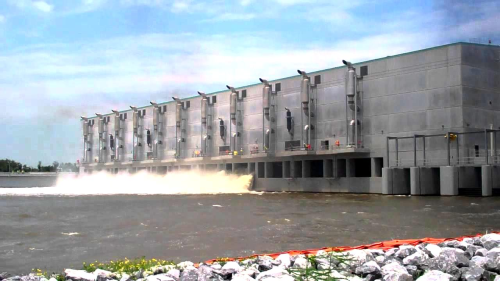
world’s largest drainage pump station, a monumental feat of engineering designed to protect one of the world’s most densely populated metropolitan regions from flooding. Officially known as the Metropolitan Area Outer Underground Discharge Channel, the facility is widely regarded as the largest and most advanced drainage pump system ever constructed.
Located beneath the northern outskirts of Tokyo, the massive underground complex features five gigantic cylindrical shafts—each over 65 meters deep—connected by a vast tunnel system that channels excess rainwater away from rivers during heavy storms and typhoons. At the heart of the facility is a colossal pressure-adjusting water tank supported by enormous concrete pillars, often compared to an underground cathedral.
The pump station is equipped with some of the world’s most powerful drainage pumps, capable of discharging more than 200 cubic meters of water per second into the Edo River. This immense capacity allows the system to prevent catastrophic flooding across Tokyo and surrounding prefectures during extreme weather events.
Engineers and city planners describe the project as a cornerstone of Japan’s flood management strategy. “This facility represents decades of innovation in disaster prevention and urban infrastructure,” said a senior official from Japan’s Ministry of Land, Infrastructure, Transport and Tourism. “It safeguards millions of lives and billions of dollars in property.”
In addition to its functional importance, the drainage pump station has become a point of global fascination, attracting researchers, engineers, and tourists from around the world. Guided tours offer visitors a rare glimpse into the scale and sophistication of the infrastructure that works silently beneath Tokyo to keep the city safe.