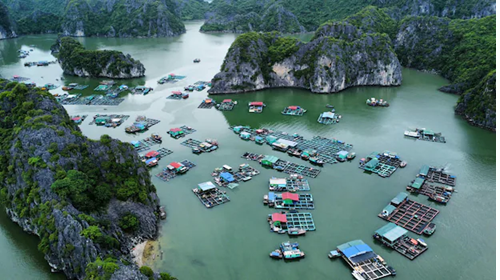
From the heart of the Mekong Delta to the scenic bays of northern Vietnam, floating villages have become defining examples of how communities adapt to life with water as their foundation. These unique settlements — where homes, livelihoods and daily life sit literally atop rivers and lakes blend cultural resilience, ingenuity and tradition in a way that continues to captivate both locals and visitors alike.
In An Giang Province’s Chau Doc Floating Village, colorful houses and fishing rafts stretch across the river confluence, creating a vibrant water‑borne community where life centers around fishing, river trade and tourism. Painted in bright hues and extending for several kilometers, the floating settlement has become an exciting attraction for travelers exploring southwestern Vietnam’s waterways.
Moving east to Quang Binh Province, the village of Tan Hoa has adapted to seasonal floods by embracing floating houses that rise with water levels. This community’s ingenuity has turned a climate challenge into a unique experience with hundreds of such homes also serving as homestays that offer visitors a close‑up look at climate‑adaptive architecture and rural waterway life.
Across Vietnam, these river‑borne homes illustrate a deeply rooted cultural adaptation to fluctuating water levels and inland waterways. In addition to residential dwellings, some floating houses are integrated with fish farming and aquaculture, reflecting how water life supports both subsistence and economic activity.
These floating communities not only sustain traditional ways of living but also attract eco‑tourism and travel interest, showcasing daily rhythms, water markets, long‑standing fishing practices and the blend of work and home life on water. From Chau Doc’s colorful river houses to Tan Hoa’s resilient flood‑ready homes, Vietnam’s floating village culture stands out as a testament to human adaptability and the enduring spirit of riverside communities turning what many see as a challenge into a way of life that continues to thrive.