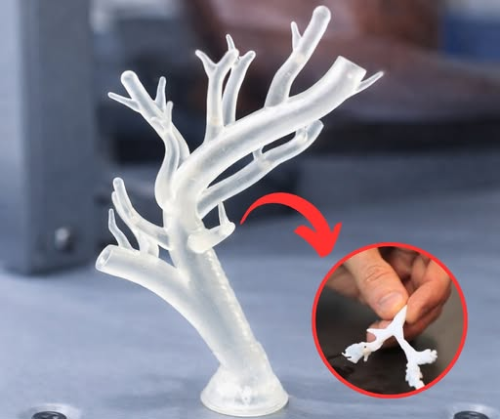
In a landmark moment that reshaped the future of healthcare, surgeons successfully implanted a living windpipe created entirely from a patient’s own cells, marking one of the most transformative breakthroughs in modern medicine. Unlike traditional implants made from metal, plastic, or donor tissue, this windpipe was 3D-printed, biologically engineered, and custom-built for a single individual—changing the rules of organ transplantation forever.
The defining achievement lay in one critical detail: because the windpipe was grown using the patient’s own biological material, the body recognized it as self. There was no immune rejection and no need for lifelong immunosuppressive drugs. For the first time, an implanted organ was not merely accepted—it became a natural part of the body.
This innovation represented a turning point after decades in which organ transplants depended on donors, long waiting lists, and the constant threat of rejection. Bioengineering introduced a radically different approach: organs designed for one person, grown with precision, and implanted with dramatically fewer complications. Medicine moved beyond replacement toward true biological restoration.
The achievement was made possible through the fusion of once-separate disciplines. Engineers used advanced imaging and 3D printing to recreate the windpipe’s structure. Scientists guided living cells to grow, adapt, and integrate. Surgeons transformed experimental science into a life-saving reality. Together, they proved that organs do not need to come from another human body to sustain life.
Though the procedure benefited a single patient, its implications reach far beyond one operating room. The success opened new possibilities for millions awaiting transplants, for children born with organ defects, and for a future in which shortages and immune rejection are no longer inevitable.