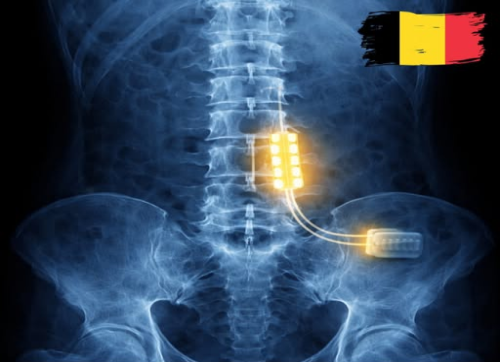
A groundbreaking spinal implant developed in Belgium is transforming the future of paralysis recovery, offering new hope to patients once told they would never move again. Created by researchers at the University of Leuven, the innovative device has enabled individuals paralyzed for years to regain voluntary movement and independence.
The technology consists of a flexible electronic implant that gently wraps around the spinal cord. By delivering precisely timed electrical pulses that mimic natural nerve signals, the system bypasses damaged sections of the spine and reactivates dormant nerve pathways below the injury. This targeted stimulation allows the brain to once again communicate with muscles.
In clinical trials, results have been nothing short of extraordinary. Patients with complete paralysis were able to walk, cycle, and even swim within days of activating the implant. The device stimulates specific nerve roots responsible for different muscle groups, producing coordinated, fluid, and natural movements rather than mechanical motion.
The benefits extend well beyond mobility. Trial participants also reported the return of bladder and bowel control, sexual function, and greater independence in everyday activities. Remarkably, some patients experienced partial restoration of sensation, suggesting the implant may support deeper neurological recovery rather than simply compensating for lost function.
The system operates wirelessly, consumes power only during movement, and can be controlled through thought, mobile apps, or voice commands. To date, more than 200 patients across Europe have successfully received the implant, marking a major milestone in neurotechnology and rehabilitation medicine.