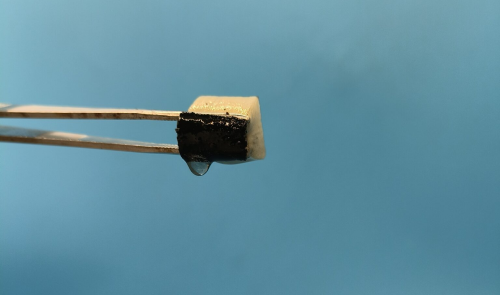
A breakthrough in sustainable technology is unlocking a powerful secret: turning air into drinking water without electricity or pipelines. At the center of this innovation is an unassuming wooden cube, a deceptively simple design that could redefine how communities around the world access clean water.
Developed by researchers focused on low-cost, eco-friendly solutions, the cube works by harvesting moisture directly from the air. Using specially treated natural materials, it captures water vapor and converts it into liquid water through passive processes—requiring no external power source, no complex infrastructure, and no fuel.
The technology is particularly promising for regions facing water scarcity, unreliable electricity, or damaged infrastructure. Because the system is compact and made from widely available materials, it could be deployed in remote villages, disaster-hit areas, and arid regions where conventional water systems fail or are too expensive to build.
What makes the wooden cube revolutionary is its accessibility. Unlike large-scale desalination plants or energy-intensive atmospheric water generators, this device relies on smart material science and natural temperature differences. As humidity levels change throughout the day, the cube absorbs moisture at night and releases clean water during warmer hours.
Sustainability experts believe this innovation could complement existing water systems rather than replace them. By decentralizing water access, communities could reduce dependence on bottled water, cut plastic waste, and gain resilience against climate-driven droughts.
The concept is already attracting attention from environmentalists, humanitarian organizations, and tech innovators who see it as a potential game-changer in the global water crisis. Further testing and scaling could open the door to mass production and widespread use in the coming years.
As the world searches for smarter ways to meet basic human needs, this wooden cube offers a glimpse into a future where clean water comes not from pipes or power plants, but from the air itself—quietly, sustainably, and within reach of everyone.