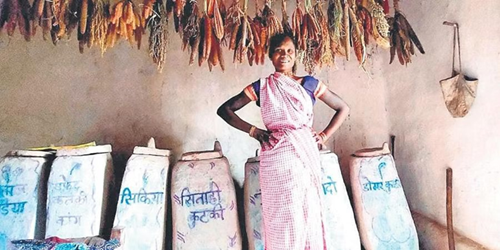
While millions scroll past headlines, 27‑year‑old Lahari Bai has been quietly safeguarding a piece of India’s agricultural heritage that money can’t buy rare and disappearing millet seeds critical for food security and biodiversity.
Hailing from the Baiga tribal community in Silpadi village, Lahari began her mission in her late teens, driven by a deep cultural connection to traditional grains and the wisdom passed down through generations. Over the past decade she has collected and conserved more than 150 indigenous millet varieties, including kodo, kutki, sikiya, salhar, sawa and chena, storing them in clay containers in a dedicated “beej bank” inside her humble mud home.
Lahari’s work goes beyond preservation she distributes these rare seeds to farmers free of cost, helping them grow nutritious millets that require less water and are resilient to harsh conditions. After farmers cultivate the crops, they often return a portion of the seeds, helping expand the gene pool and strengthen local food systems.
Her efforts have drawn national and international attention. Lahari was named India’s brand ambassador for millets, earning praise from Prime Minister Narendra Modi and spotlighting her role in the United Nations‑backed International Year of Millets 2023 initiative. Publications also note she has shared seeds with hundreds of farmers across dozens of villages, ensuring these ancient grains continue to feed families and protect food heritage.
Lahari’s journey has not been without challenges she was once mocked for her passion but today is recognized as a guardian of biodiversity whose seed bank supports resilient agriculture in a changing climate. Her work was showcased at forums on farmers’ rights and food sustainability, inspiring others to value and protect traditional crops for future generations.