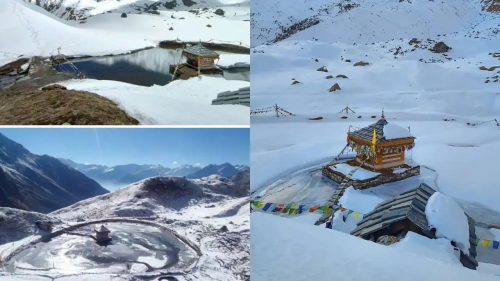
High in the rugged Himalayas, overlooking the breathtaking Rora Valley, lies a sacred site now capturing global attention: the world’s highest Lord Krishna temple, perched beside the serene Yulla Kanda Lake at an altitude of 3,895 metres. Recently, a viral video showing the shrine completely buried in snow — its stone walls, prayer flags, and surrounding ridges wrapped in a soft white blanket — has turned this remote spiritual spot into a worldwide talking point.
The temple, located in the Kinnaur district of Himachal Pradesh, is not only a place of devotion but also a marvel of endurance and nature’s raw beauty. Trekkers describe the landscape as otherworldly during winter, with the lake shimmering like a frozen mirror and the valley echoing with silence broken only by the wind sweeping across snowy slopes.
Reaching the temple is a formidable challenge. The 12-kilometre trek begins in Yulla Khas village and winds through a dramatic mix of wildflower-filled meadows, dense alpine forests, tranquil waterfalls, and high-altitude ridgelines. Adventurers pass iconic points including Buran Ghati, Listigarang Pass, and Kashang Pass — each offering sweeping panoramas of the towering Kinnaur mountains.
Local lore adds another layer of mystique. According to legends preserved by the region’s communities, the Yulla Kanda Lake was formed by the Pandavas during their exile, and many still believe a dip in its icy waters purifies the mind and body. The lake and temple together form a revered pilgrimage route, especially during Janmashtami, when devotees undertake the steep ascent to offer prayers and witness the vibrant festival fair held by local villagers.
Though simple in structure, the temple’s location and the spiritual experience surrounding it make it one of the Himalayas’ most extraordinary destinations. The recent snowfall video has brought renewed interest to this little-known pilgrimage, inspiring travellers, mountaineers, and devotees alike.