NVIDIA’s recent $20 billion move has sent a clear message: while GPUs remain unmatched for AI training, inference—the stage where models actually generate results—is where the real competition is heating up.
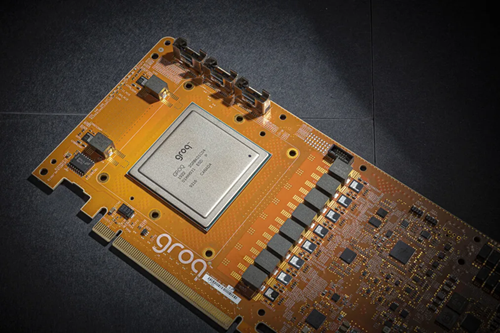
Enter Groq. Founded by one of the creators of Google’s TPU, Groq recognized early that traditional GPUs, though versatile, are not optimized for inference speed or predictability. The company’s solution: software-defined silicon. By removing dynamic scheduling and jitters, Groq’s compiler maps all computations in advance, ensuring fully deterministic performance.
Groq also made a bold architectural choice, using ultra-fast SRAM instead of HBM. While critics doubted whether massive AI models could fit, Groq proved them wrong by chaining thousands of chips into one massive logical processor. The results are striking: token generation is up to 10× faster, latency is smoother, and developers report an experience far superior to NVIDIA’s H100 GPUs.
NVIDIA may still dominate training workloads, but this deal underscores that the inference market—where efficiency, speed, and predictability matter most—is now the next major battleground for AI innovation.