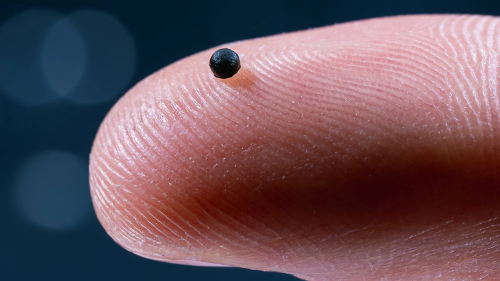
In a groundbreaking medical breakthrough, scientists in Switzerland have created microscopic robots capable of navigating the bloodstream to detect and eliminate stroke-causing blood clots. This innovation, merging robotics, nanotechnology, and medicine, marks a dramatic leap toward treatments once thought to exist only in science fiction.
These tiny bio-robots are engineered to swim through the circulatory system with remarkable precision, identifying blockages in arteries or veins before they can cause severe damage. Once a clot is detected, the robots can destroy or dissolve it almost instantly, restoring normal blood flow and potentially preventing life-threatening strokes.
Researchers report that the robots are designed to operate safely within the human body, avoiding healthy tissue while targeting only harmful obstructions. Early laboratory tests have shown promising results, demonstrating that these microscopic machines can navigate complex vascular networks with extraordinary accuracy.
Experts predict that, if successfully translated to clinical practice, this technology could revolutionize the treatment of stroke, heart attacks, and other vascular conditions, offering faster, less invasive solutions compared to traditional surgery or medication. Beyond clot removal, future iterations may carry drugs or perform other therapeutic tasks directly inside the bloodstream.
This advancement represents a fusion of medicine and robotics, signaling a new era where precision-engineered machines may become integral partners in human health. While clinical applications are still under careful development, the achievement places Switzerland at the forefront of next-generation medical technology, heralding a future in which diseases can be combated at a microscopic, targeted level.